Recommended choice: Jewish Prague with a historian, 3 h. Book this Tour details
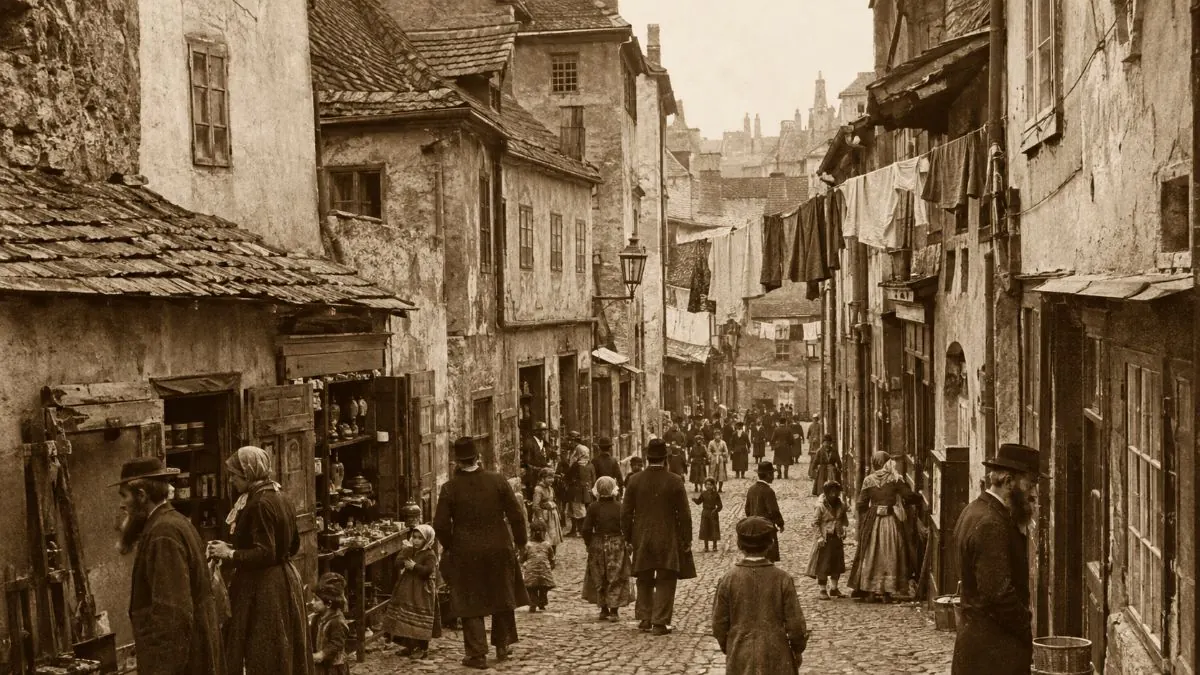
Jews had been living in Prague since the 10th century. The ghetto by the Vltava survived pogroms, expulsions, fires and the plague. It was only the city’s slum clearance at the turn of the 19th and 20th centuries that demolished it.
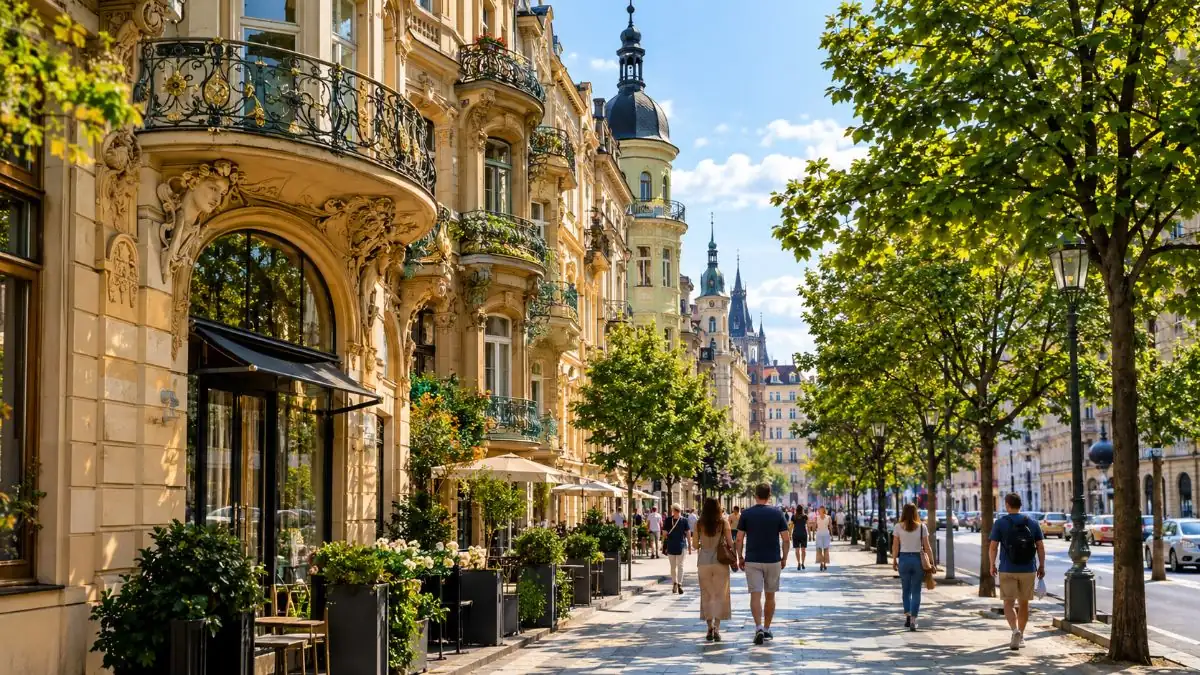
What you see today is a selection: six synagogues, the Old Jewish Cemetery and the Jewish Town Hall. The rest was replaced by tenement houses with balconies.
Short answer
Jews had been living in Prague since the 10th century. The ghetto’s golden age came in the late 16th century under Mordechai Maisel and Rabbi Loew. The name Josefov dates back to 1850, after Emperor Joseph II. Most of the quarter was demolished between 1893 and 1913.
Since when have Jews lived in Prague?
At least since the 10th century. The first written mention of Jewish merchants at Prague markets dates from the 960s.
An account was left by the Arab-speaking traveller Ibrahim ibn Yaqub. The first recorded pogrom occurred in 1096, during the First Crusade. In 1262, Přemysl Otakar II issued a statute granting Jews in Bohemia the king’s protection and a degree of self-governance.
In the Middle Ages, the community was concentrated in a closed ghetto on the right bank of the Vltava, between the Old Town and the river.
What was the ghetto like in the Middle Ages?
It was a walled quarter with gates, its own town hall, synagogues and a cemetery. Life here unfolded in narrow streets and dense conditions.
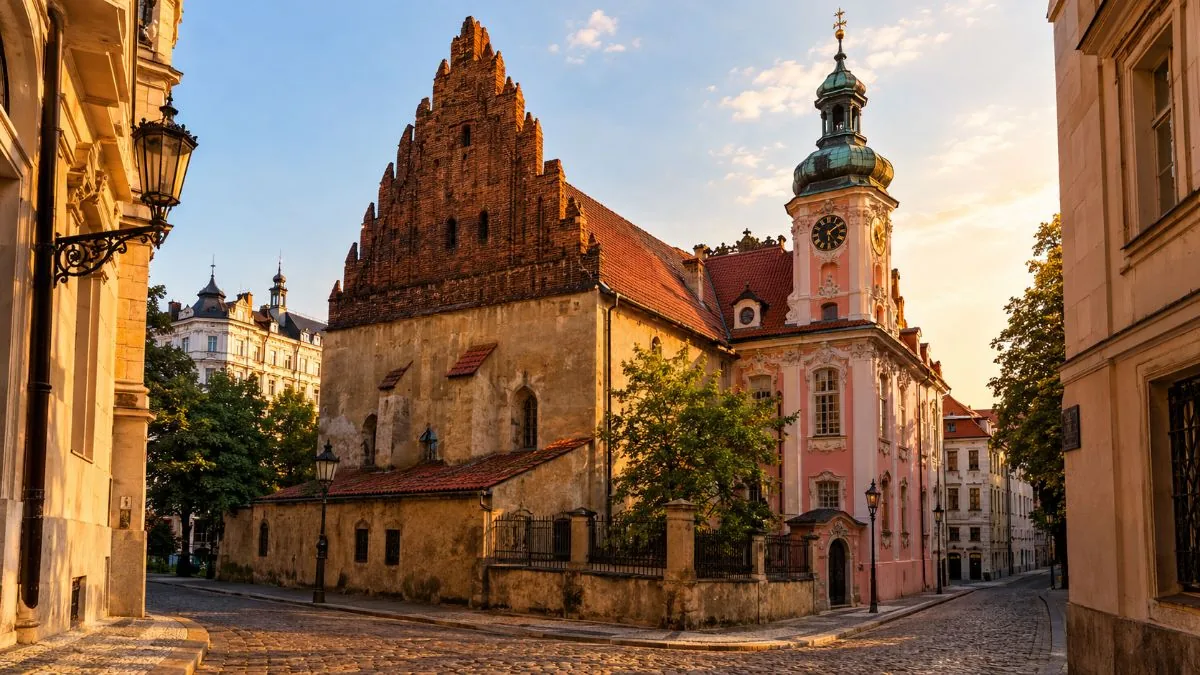
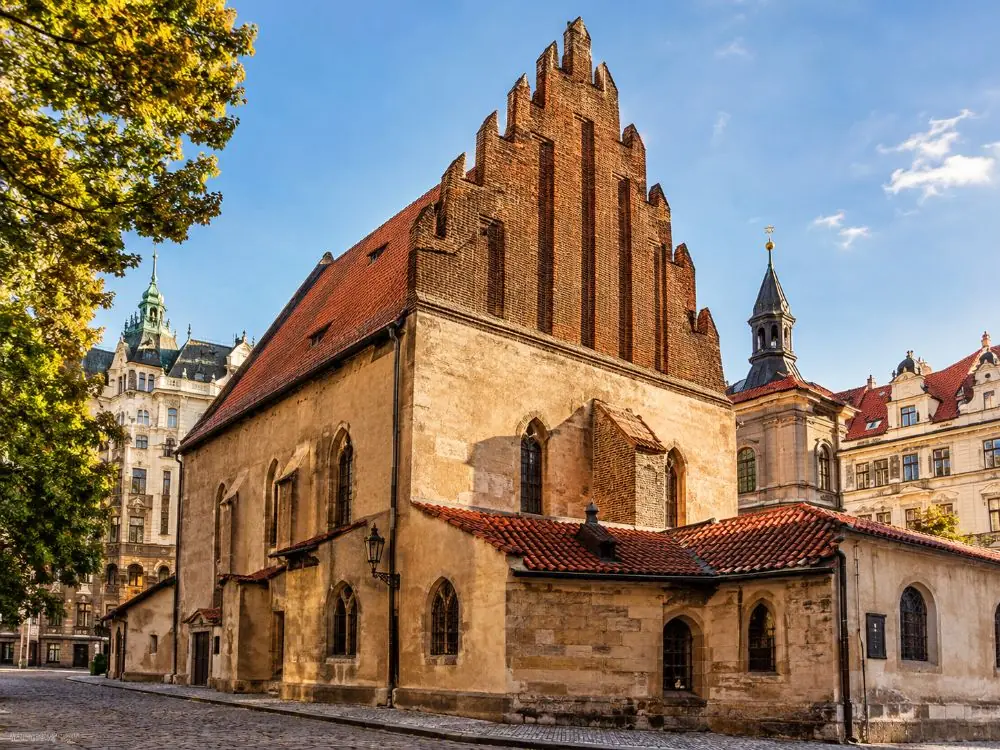
The Old-New Synagogue was built in the last third of the 13th century and still serves as the community’s main synagogue. The Old Jewish Cemetery was used from the first half of the 15th century; the oldest gravestone belongs to Avigdor Kara, who died in 1439.
Kara survived the great Easter pogrom of 1389 and wrote an elegy about it. The ghetto then endured the expulsions of the 16th century. Each time, the community returned.
Ghetto stories with a historian in a small group of up to six people: the Old-New Synagogue, Golem and Kafka’s birthplace.
Book thisWho were Mordechai Maisel and Rabbi Loew?
Maisel was the primate of the Jewish community and the richest man in the ghetto, while Rabbi Loew was a scholar and chief rabbi. Both lived in the late 16th century, during the reign of Emperor Rudolf II.
Mordechai Maisel (1528 - 1601) funded the Maisel Synagogue, the High Synagogue and the Jewish Town Hall, and had the streets paved. Jehuda Löw ben Becalel, known as Maharal, died in 1609 and is buried in the Old Jewish Cemetery. At the same time, the astronomer David Gans lived in Prague.
The legend of the Golem, the clay giant brought to life by Rabbi Loew, is far younger than the rabbi himself. It first appears in writing only in the 19th century and today sells T-shirts in every souvenir shop.
Why is the quarter called Josefov?
The quarter was named Josefov in 1850, when it became part of Prague, after Emperor Joseph II, whose reforms of 1781 and 1782 eased restrictions on Jews.
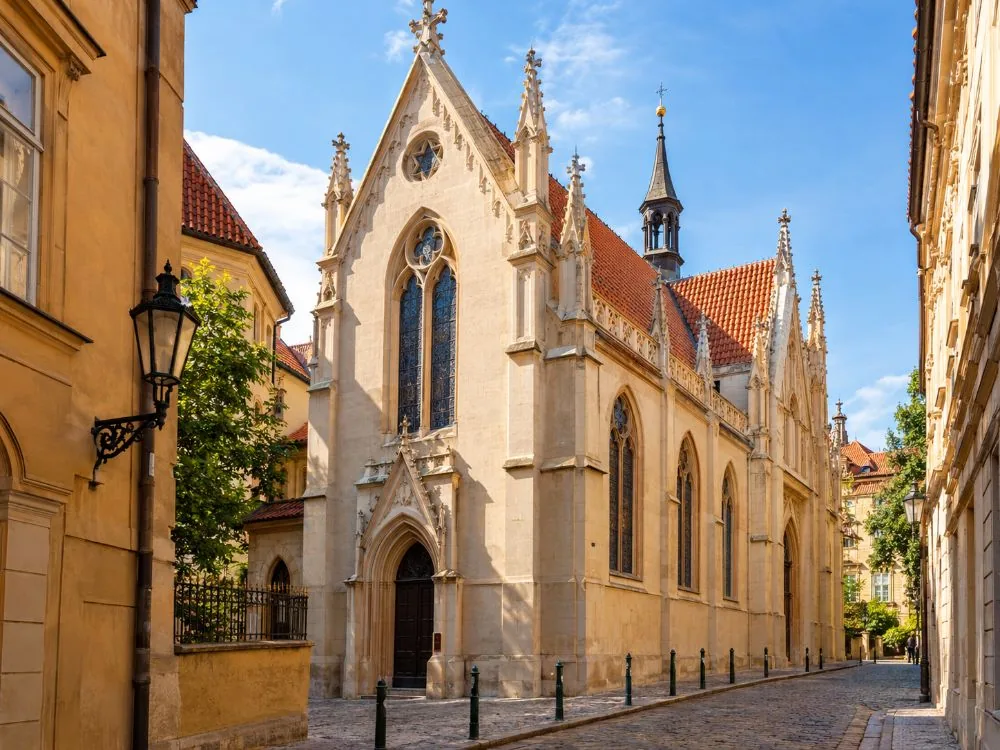
Before that came hard times. After a fire in 1689, much of the ghetto burned down; the Baroque Klausen Synagogue dates from that period. Between 1745 and 1748, Maria Theresa expelled the Jews from Prague, and the community was only allowed to return after several years.
Joseph II’s Tolerance Patent of 1782 opened schools, trades and commerce to Jews. Wealthier families gradually moved out of the ghetto, leaving the poor behind in the narrow streets.
| Year | Event |
|---|---|
| 10th century | First mentions of Jews in Prague |
| 1096 | First pogrom during the Crusades |
| 1262 | Statute of Ottokar II of Bohemia |
| 1389 | Great Easter pogrom |
| end of the 16th century | Golden Age: Maisel, Rabbi Loew |
| 1689 | Ghetto fire |
| 1745 to 1748 | Expulsion under Maria Theresa |
| 1782 | Toleration Patent of Joseph II |
| 1850 | The quarter is named Josefov and joined to Prague |
| 1893 to 1913 | Slum clearance, most of the quarter demolished |
| 1906 | Jewish Museum in Prague founded |
| 1994 | The museum was returned to the Federation of Jewish Communities |
Why was the ghetto demolished?
Due to slum clearance. The city wanted healthy districts in the style of Paris and between 1893 and 1913 demolished most of Josefov.
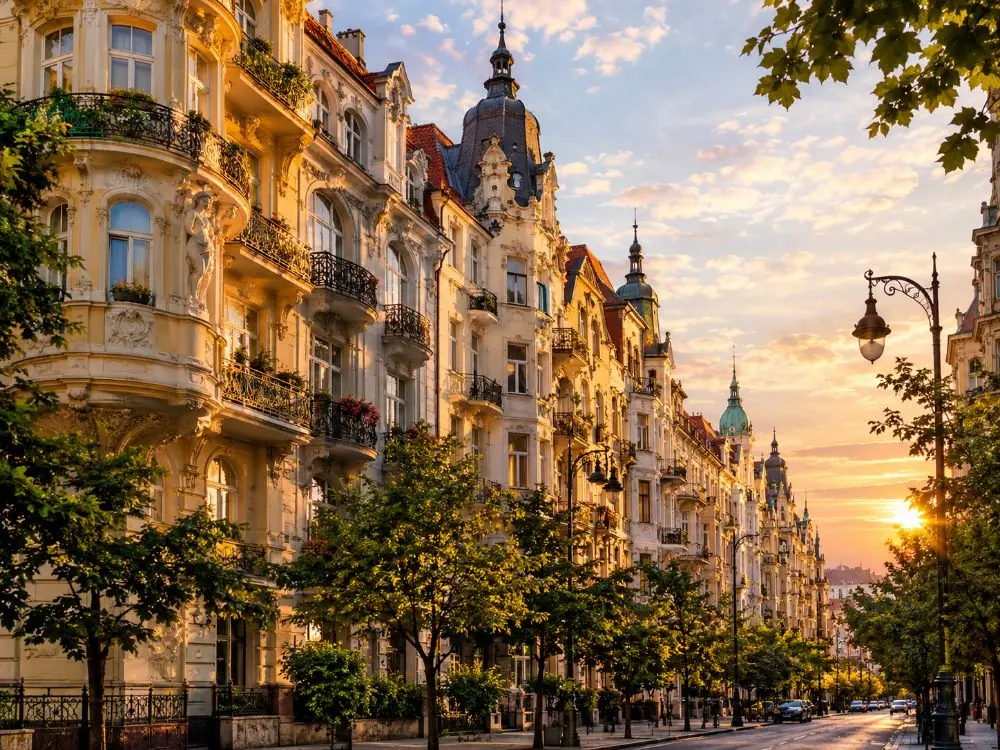
By the end of the 19th century, Josefov was overpopulated and lacked a sewage system. According to period records, over 18,000 people lived here before the demolition. The slum clearance destroyed houses, alleys and several synagogues. Six synagogues, the old cemetery and the town hall remained. Pařížská street, with its Art Nouveau buildings, was created on the site of the old alleys.
In the 2021 census, Josefov had 977 residents.
How did the Jewish Museum come about?
In 1906, to preserve items from synagogues demolished during the slum clearance. During the war, it became a repository for property from the defunct communities.
The museum was founded by historian Salomon Hugo Lieben and August Stein. In 1942, the Central Jewish Museum was established on the initiative of the Jewish community, where items from communities across Bohemia and Moravia were collected. It is often said that the Nazis wanted a “museum of an extinct race”. However, no document confirms this.
In 1950, the state took over the museum. It was returned to the Federation of Jewish Communities on 1 October 1994. Today, it manages more than 44,000 objects and 130,000 books.
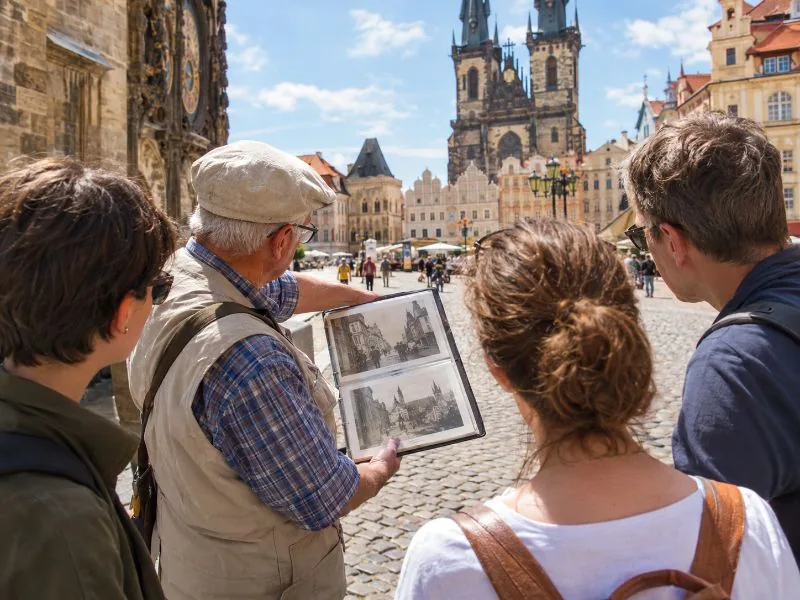
Three hours with a local historian, maximum six people: the ghetto, Golem, Kafka and deportation sites.
Book this Tour detailsHow many Jews live in Prague today?
Few. In 2018, demographer Sergio DellaPergola estimated around 3,900 Jews in the entire Czech Republic, most of whom live in Prague.
The 2011 census counted 1,474 people who declared Jewish faith, but the actual number is higher, as many did not answer the question about religion. Before the war, Prague was home to over 90,000 Jews. Most did not survive the Shoah.
Prague’s Jewish community is still active today: it has synagogues, schools, kosher shops and restaurants. For statistics, see the World Jewish Congress.
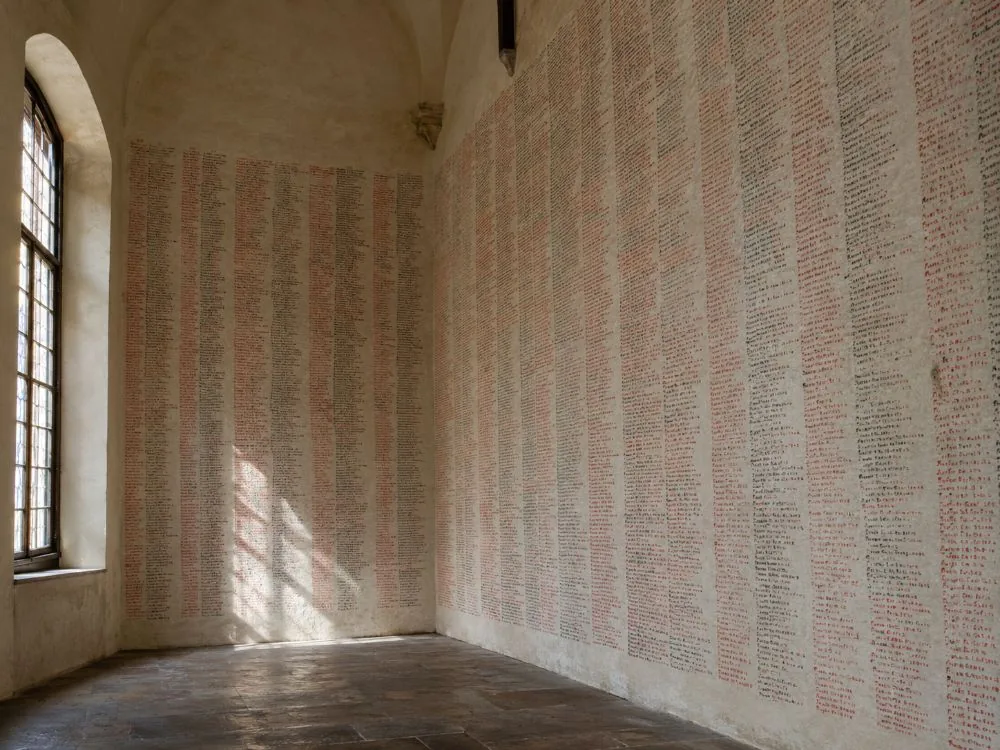
The children’s drawings in the Pinkas Synagogue were created in Terezín. A guided tour will take you there by bus from Prague.
Book thisAre Jews welcome in Prague?
Jewish life in Prague is public and ongoing. The Old-New Synagogue has served worship for over 700 years, except during the Nazi occupation.
Services are held at the Old-New, High, Jerusalem and Spanish Synagogues, as well as in the liberal communities Bejt Praha and Bejt Simcha. The Lauder Schools and kosher restaurants are active. The Federation of Jewish Communities publishes an annual report on antisemitism to have facts, not impressions.
Security frames at museum entrances are a standard part of the visit. For tourists, this mainly means one thing: expect a check and avoid bringing large luggage.
Ghetto, Maisel and Rabbi Loew with a licensed guide, synagogue entries included as per the listing.
Book thisFrequently asked questions
Why is it called the Jewish Quarter?
Because Prague’s Jewish community lived here from the Middle Ages, with its own town hall, synagogues and cemetery. The museum today calls the whole circuit the Prague Jewish Town.
Why is Josefov so famous?
Because of what survived the slum clearance: Europe’s oldest surviving synagogue, a cemetery with over 12,000 gravestones and the collections of the Jewish Museum in Prague. Then there’s the legend of the Golem.
Is Josefov on the UNESCO list?
Yes, as part of the Historic Centre of Prague, inscribed in 1992. It does not have a separate entry.
Was the Golem real?
No, it is a legend. Rabbi Loew did live and died in 1609, but the story of the clay giant was first written down in connection with his name only in the 19th century.
Book now
Choose a tour
All these tours can be cancelled with free cancellation up to 24 hours in advance. On Saturdays and Jewish holidays, the interiors are closed.
Jewish Prague with a local historian
Golem, Kafka and deportation sites in a small group
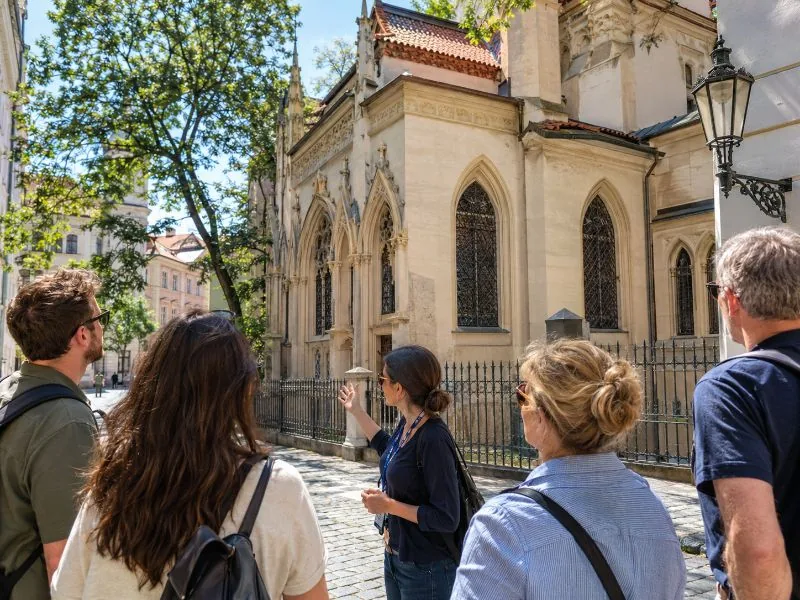
Jewish Quarter walk with entry tickets
- Licensed guide, commentary in five languages
- Entry to the Old-New, Pinkas, Maisel and Spanish Synagogues
- Entry to the Old Jewish Cemetery
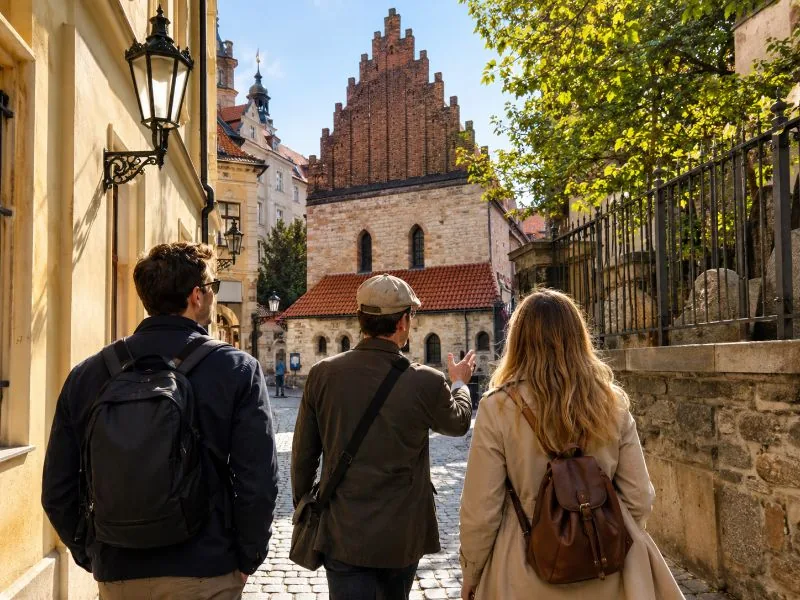
Private three-hour tour of Josefov
- Private guide, English, French or German
- Admission to the Jewish Museum in Prague as per offer, verify
- Meeting point at Old Town Square, guide with a name sign