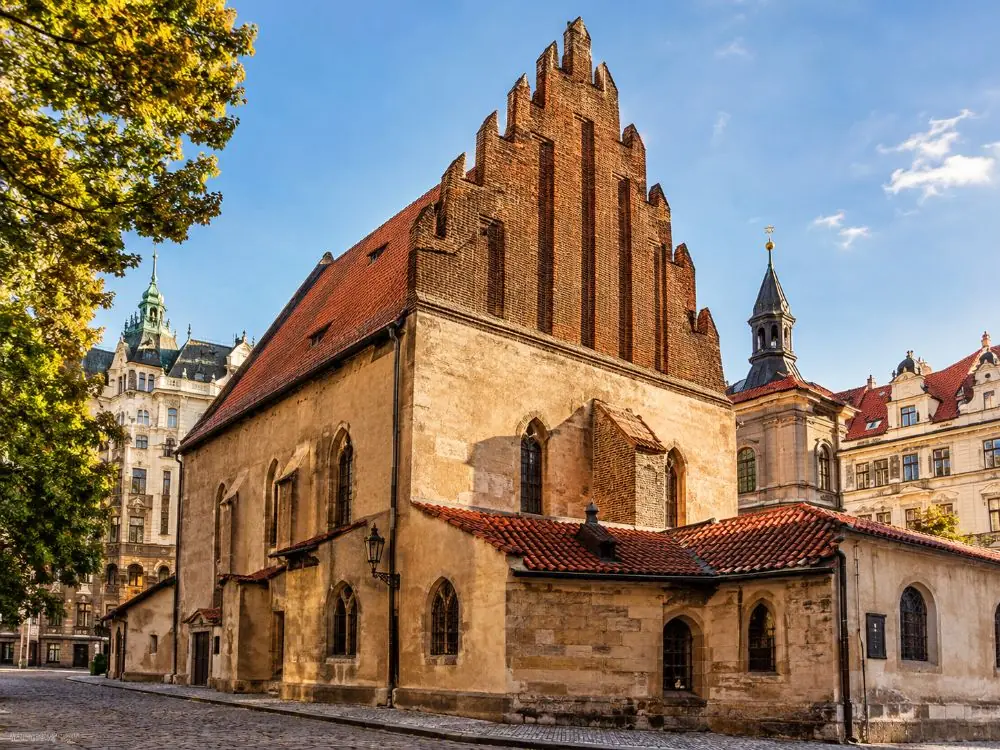
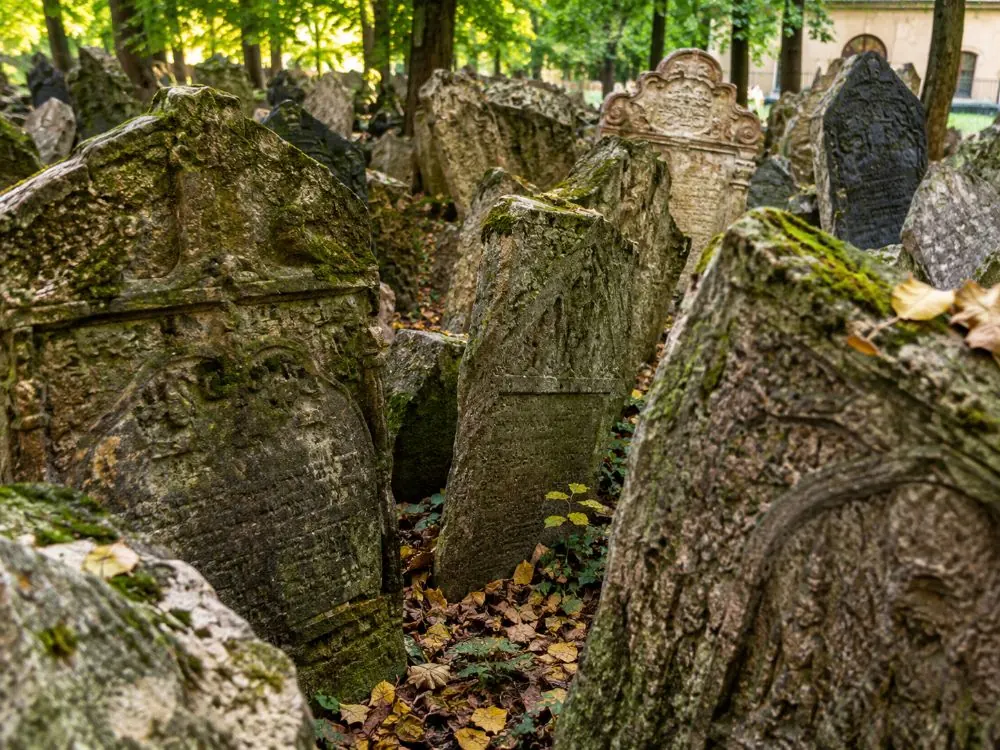
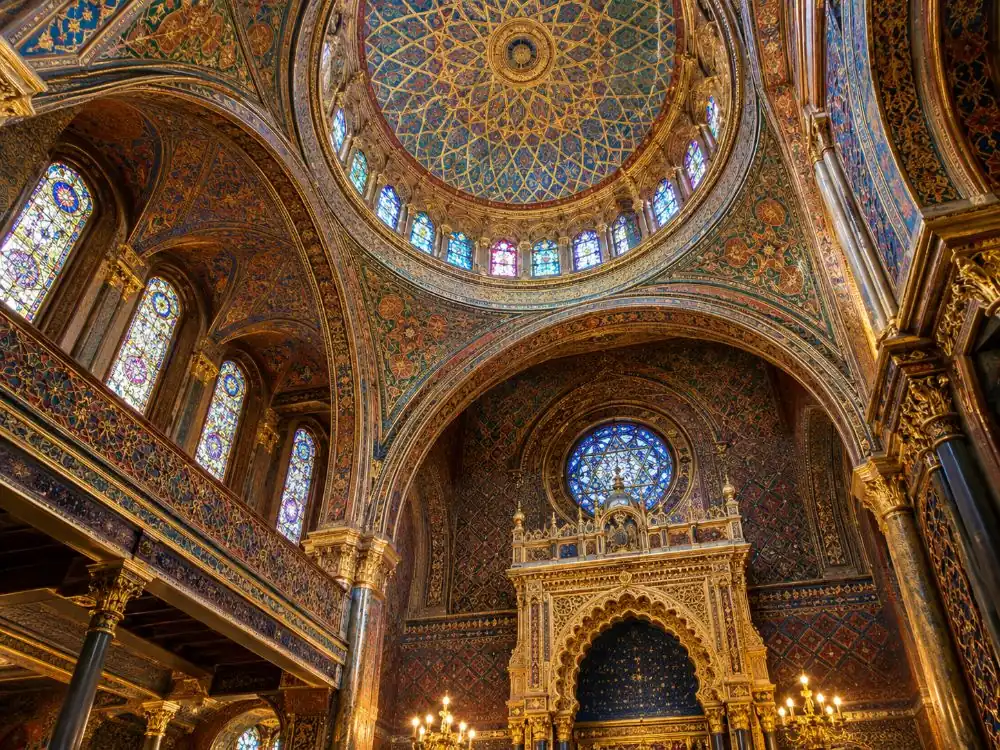
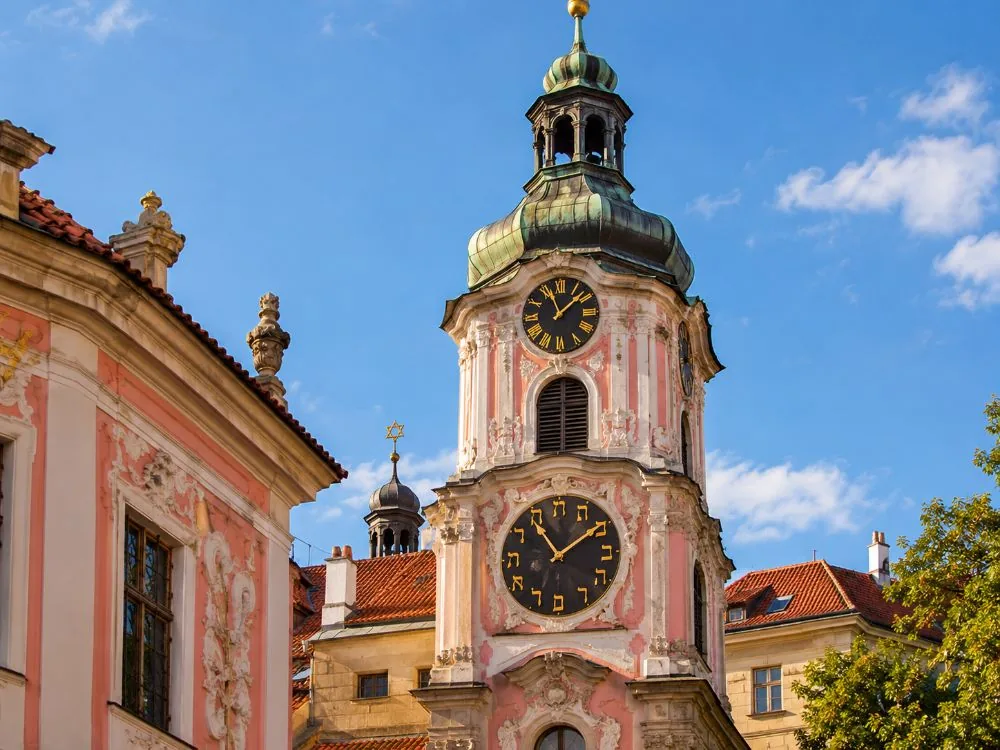
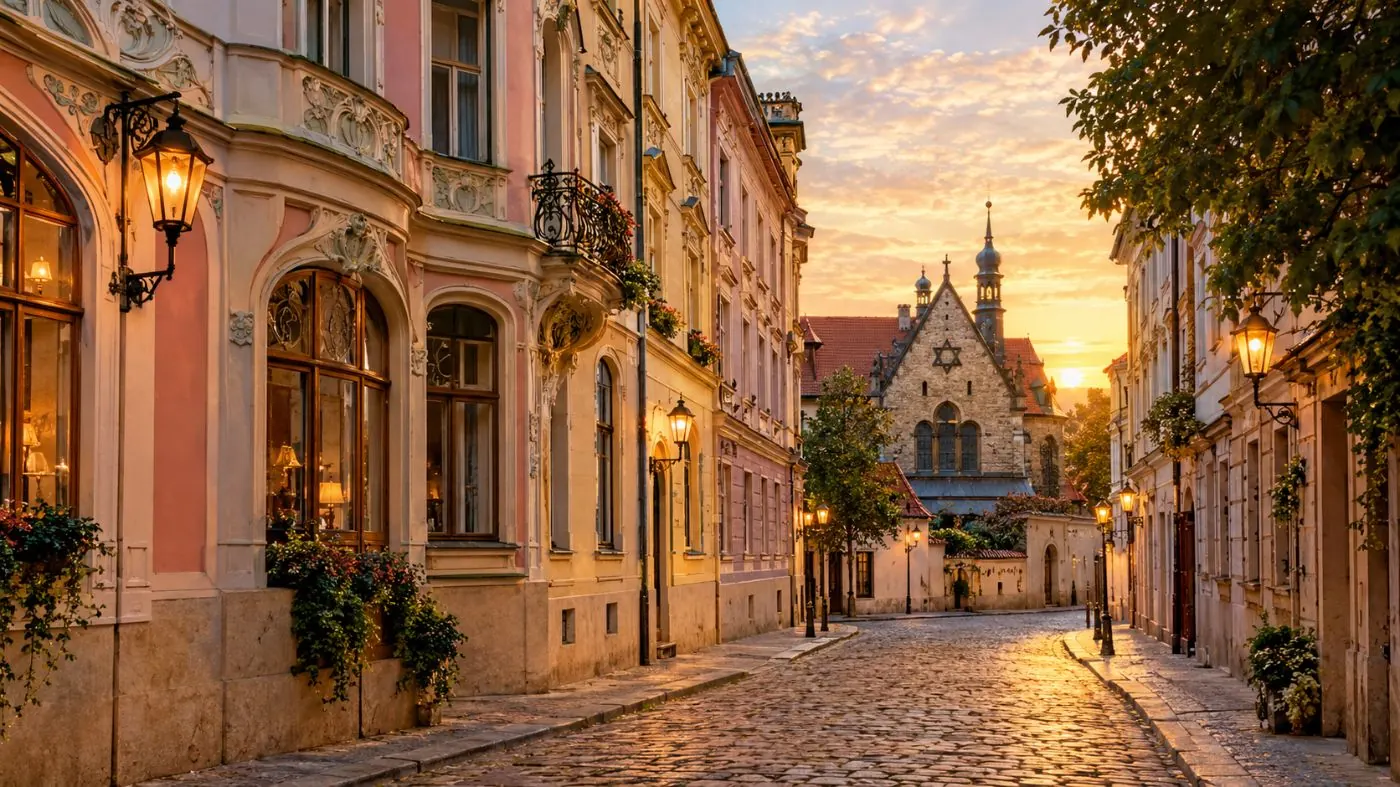
The former Prague ghetto near Old Town Square, where slum clearance spared six synagogues, an old cemetery and a town hall with a clock that runs backwards. Step beneath the Gothic gable of the Old-New Synagogue, walk among 12,000 gravestones and lift your eyes to the gilded ceiling of the Spanish Synagogue.
Know where you’re goingFor each tour we list the included entries
Real reviewsFrom verified GetYourGuide bookings
free cancellationUp to 24 hours in advance for all tours here
Secure bookingPayment is processed directly on GetYourGuide
Tours
Choose a tour of Josefov
In the middle, a guided walk that includes entry to the synagogues and the cemetery. On the left, just the ticket with a brief introduction; on the right, a private guide exclusively for your group. Each card links to the tour’s detailed page.
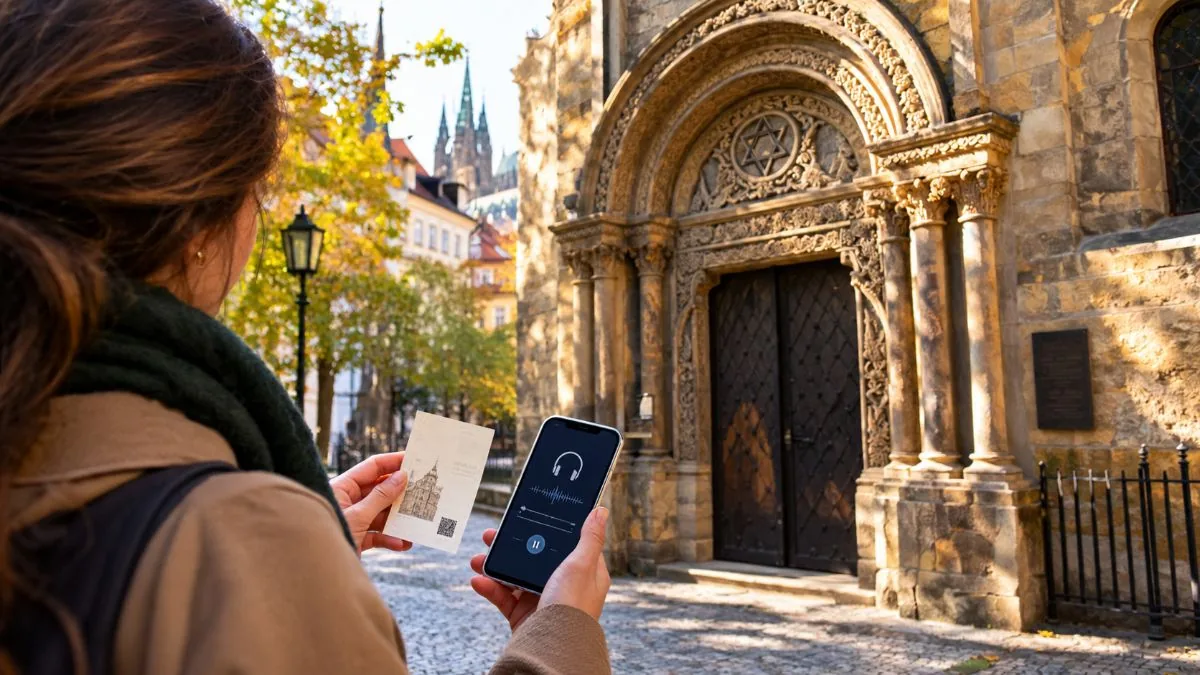
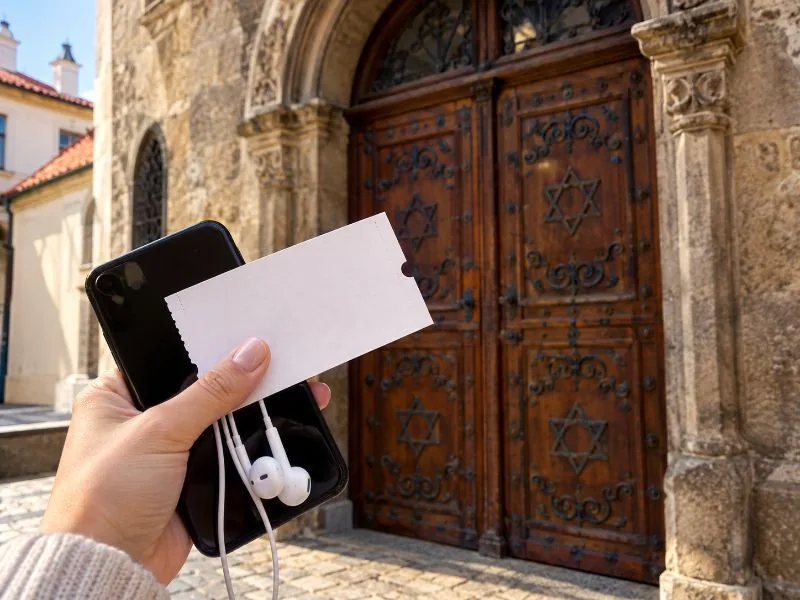
Entry ticket to the synagogues and cemetery with a 20-minute guide introduction. After that, explore on your own with an optional audio guide on your phone.
What’s included
Admission to the Old Jewish Cemetery and the Old-New, Spanish, Maisel and Pinkas Synagogues
20-minute guided introduction, available in English
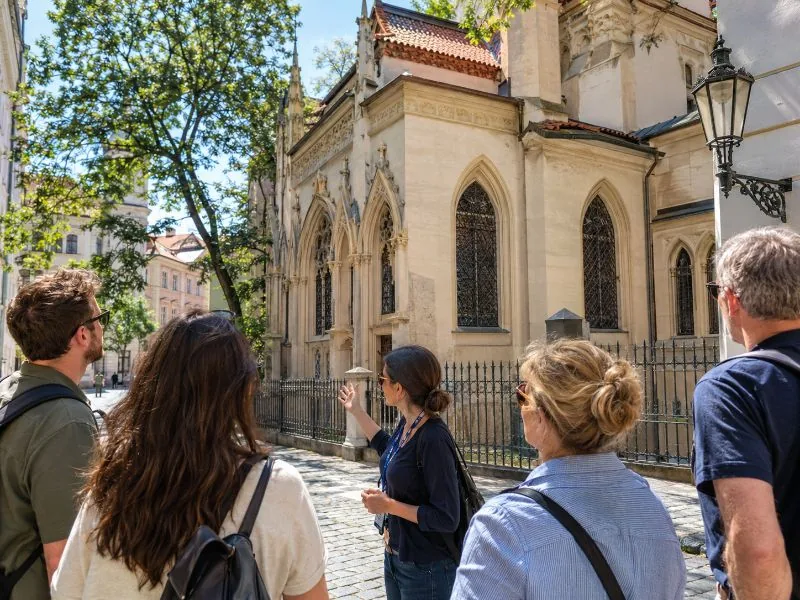
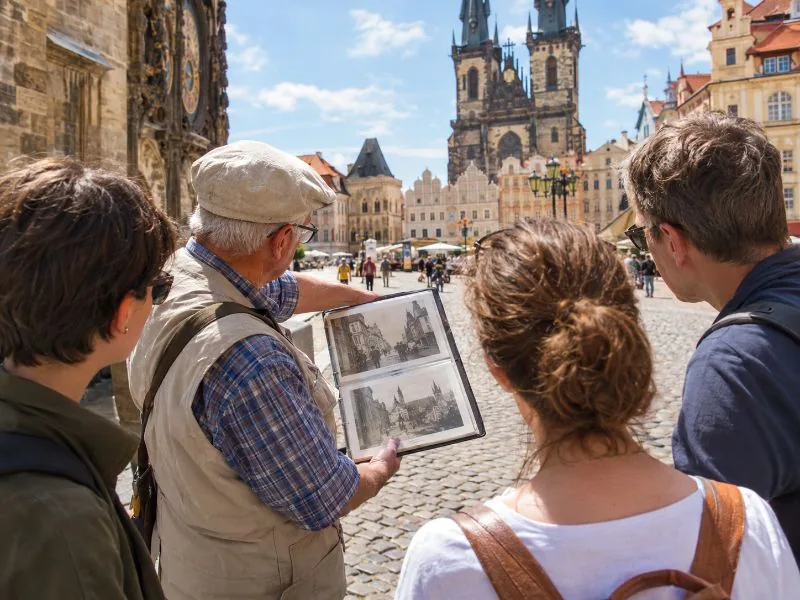
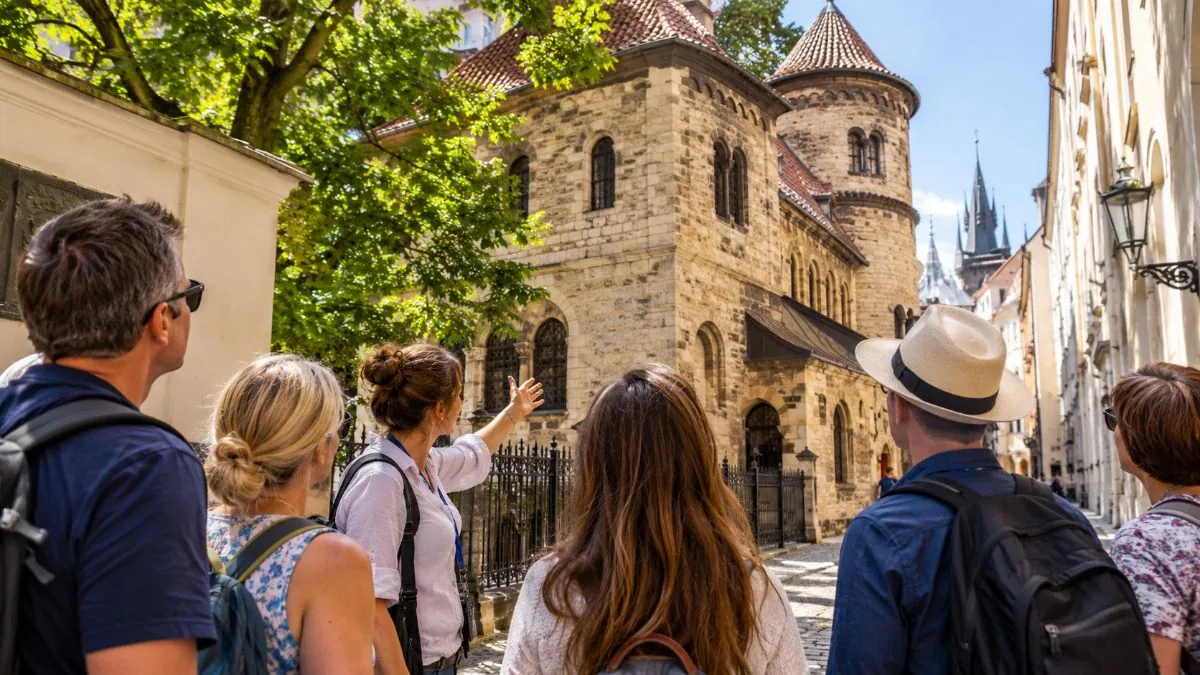
A licensed guide will take you through five sites on the circuit, from the Maisel Synagogue to the Spanish Synagogue. Admission is included, so you won’t have to queue at the ticket office.
What’s included
Licensed guide, commentary in five languages
Entry to the Old-New, Pinkas, Maisel and Spanish Synagogues
A private guide just for your group: the old cemetery and the synagogues on the circuit, with commentary on whatever is currently open. You set the pace and the stops.
What’s included
Private guide, English, French or German
Admission to the Jewish Museum in Prague as per offer, verify
Meeting point at Old Town Square, guide with a name sign
Three questions to decide. Do you want to enter the synagogues, or just walk the streets? Do you want a guided tour, or your own pace? And do you need a group just for yourselves?
The museum ticket is valid for three days and is non-refundable. Tours on GetYourGuide can be cancelled with free cancellation up to 24 hours in advance. On Saturdays and Jewish holidays, no tours include interior visits.
Before you buy a ticket
The streets are free, one ticket covers all the doors.
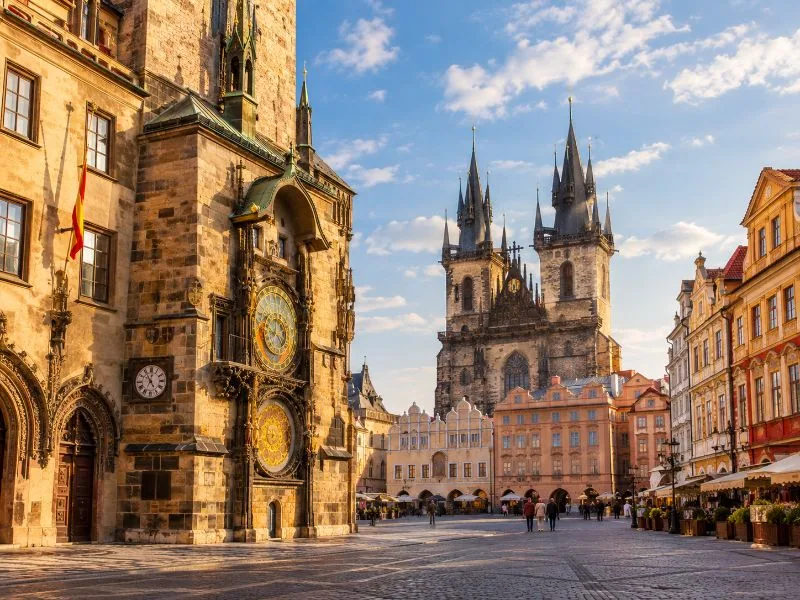
You can walk around Josefov as long as you like without paying a penny. Pařížská, Široká, Maiselova and Červená are regular streets in Prague 1, and from outside you can see the Gothic gable of the Old-New Synagogue and the Town Hall with its Hebrew clock. You only pay to go through the doors: the synagogues and the Old Jewish Cemetery form a single circuit of the Jewish Museum in Prague with one joint ticket.
Since 1 January 2024, there is no separate ticket for the Old-New Synagogue; it is now part of the circuit. You can buy tickets online in the museum’s e-shop or at the Information and Reservation Centre at Maiselova 15. Almost every tour on GetYourGuide sells the same ticket, with the added benefit of a guide. The shortest walking tours do not include interior visits, and this is a difference worth reading the fine print for. The Jerusalem Synagogue in the New Town is not part of the circuit and has its own admission fee.
3
The ticket is valid for individuals, families and groups of up to five people, with each place used once. The museum’s website lists opening days, while the visitor regulations refer to calendar days; expect the shorter option. Groups of six or more are only valid on the day of issue.
Opening hours, what the ticket covers, rules inside and what to bring. Each topic has its own tab.
January to March: museum sites 9:00 to 16:30, Old-New Synagogue 9:00 to 17:00.
April: all sites 9:00 to 18:00.
May to August: 9:00 to 19:00, the longest days of the year.
1 September to 17 October: 9:00 to 18:00. From 18 October to the end of the year: 9:00 to 16:30, Old-New Synagogue until 17:00.
Christmas Eve only 9:00 to 14:00. Closed every Saturday and on Jewish holidays. Source: Jewish Museum opening hours.
One ticket: Old-New, Pinkas, Maisel and Spanish Synagogues, Old Jewish Cemetery and Klausen, when open.
Valid for three days, each site once (the museum’s website lists opening times and visitor rules by calendar day). Groups of six or more only on the day of issue.
The ticket is non-refundable and cannot be replaced if lost. You can buy it online or at Maiselova 15.
Children under 6 enter free, students under 26 and children aged 7 - 15 get a reduced rate.
With a Prague Visitor Pass or Prague CoolPass, you get free entry, each site once.
There is a security frame at the entrance; bags may be inspected. Luggage over 30 litres is not permitted inside.
Men must cover their heads in the cemetery. Visitors must stay on the marked path.
You may take photos for personal use, but without a tripod, selfie stick or flash.
Cover your shoulders and midriff; swimwear and bare feet are not allowed. No eating, drinking or smoking inside.
Children under 15 must be accompanied by an adult. Only guides accredited in the Czech Republic may lead tours inside.
Wear comfortable shoes: you’ll be walking and standing a lot between sites.
A small bag, not a day backpack. There is no luggage storage here.
In summer, a scarf or light shirt to cover your shoulders.
Bring your own cap or kippah for the cemetery if you do not want to borrow one. More in the guide what to see in Josefov.
TicketSix sitesFour synagogues, the Old Jewish Cemetery and the Klausen Synagogue when it is open.
Validity3 daysFor individuals, families and groups of up to five people.
ClosedSaturdays and Jewish holidaysThe museum publishes holiday dates a year in advance.
Peak visitor times11 am to 3 pmIt’s usually quiet in the morning after 9 am and late in the afternoon.
Time2 to 3 hoursFor the main sites and the cemetery, depending on the museum.
Cancellation24 h for toursThe museum ticket is non-refundable, tours have free cancellation.
Where it is
Where to find Josefov
Between Old Town Square and the Vltava
Information and Reservation Centre: Maiselova 15, Prague 1
Josefov is small. From Old Town Square, you can walk here via Pařížská street in a few minutes; the nearest metro station is Staroměstská on line A. Most tours start in Josefov or right next door: at the office on Maiselova 5, near Old Town Square or by the Rudolfinum.
Pinkas Synagogue and cemetery entrance: Široká 3
Wheelchair access to the cemetery: U Starého hřbitova street
Best times to visit, what people only discover on arrival, what you can see without a ticket and how holidays affect opening.
Right at 9 am: the first hour is the quietest; the museum itself recommends avoiding 11 am to 3 pm.
Late afternoon: from April to October it’s open until 6 or 7 pm, and the crowds thin out.
Friday: the Old-New Synagogue closes early for Shabbat, so visit it first.
Winter: shorter opening hours, but fewer people queuing for security checks.
Buy your ticket online in advance; the museum explicitly recommends this.
The ticket is valid for three days: the cemetery and Pinkas Synagogue today, Spanish Synagogue tomorrow, if that’s too much for one day.
Pinkas Synagogue is a memorial. People speak quietly here, and guides shorten their commentary.
For GetYourGuide walks, check which doors you enter through. ‘Jewish Quarter’ in the title doesn’t necessarily mean interiors.
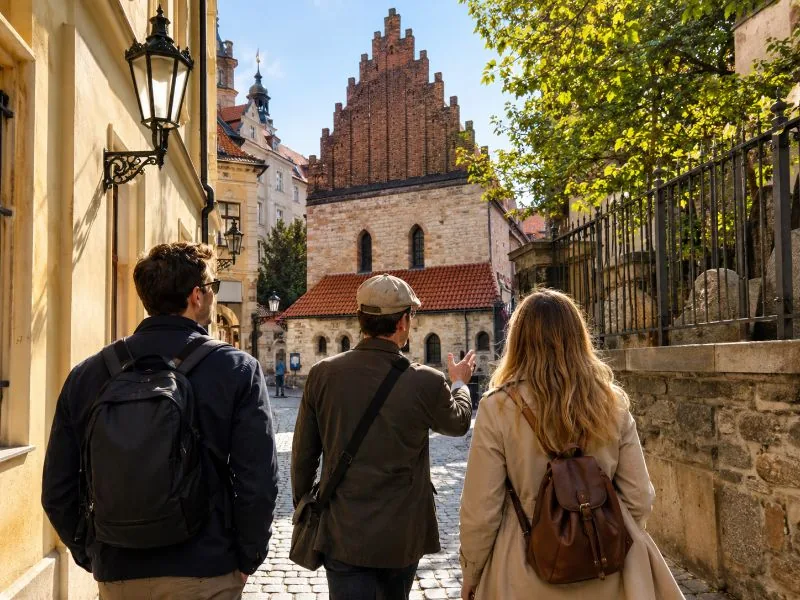
From the outside, you can see the Old-New Synagogue, High Synagogue and Jewish Town Hall. The lower dial of the Town Hall has Hebrew letters, and the hands move backwards.
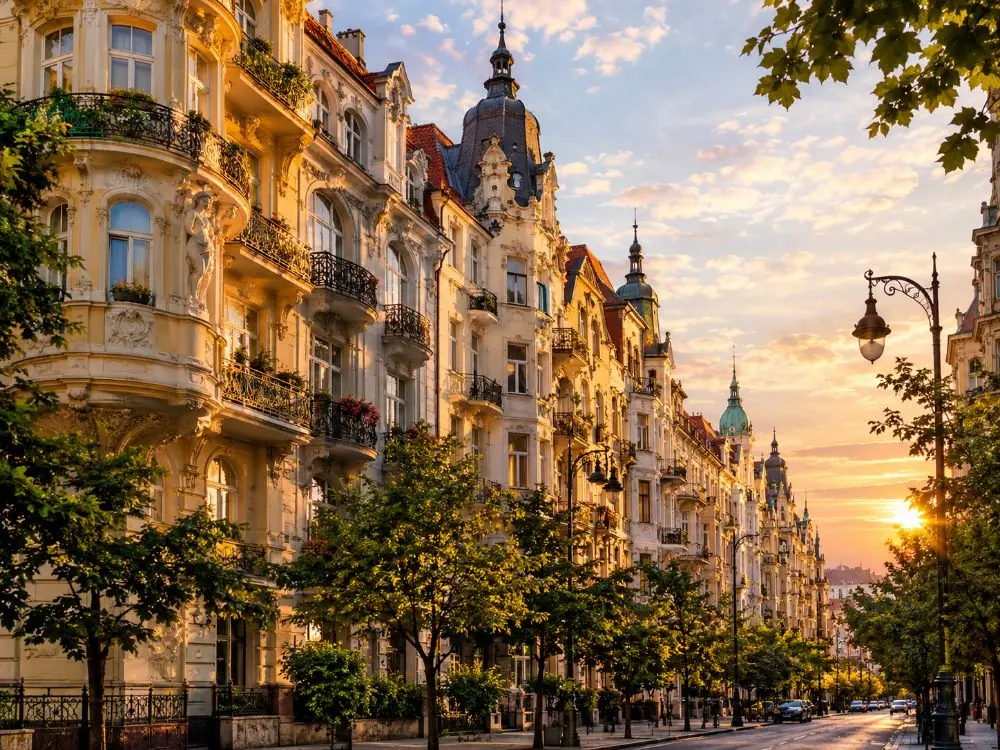
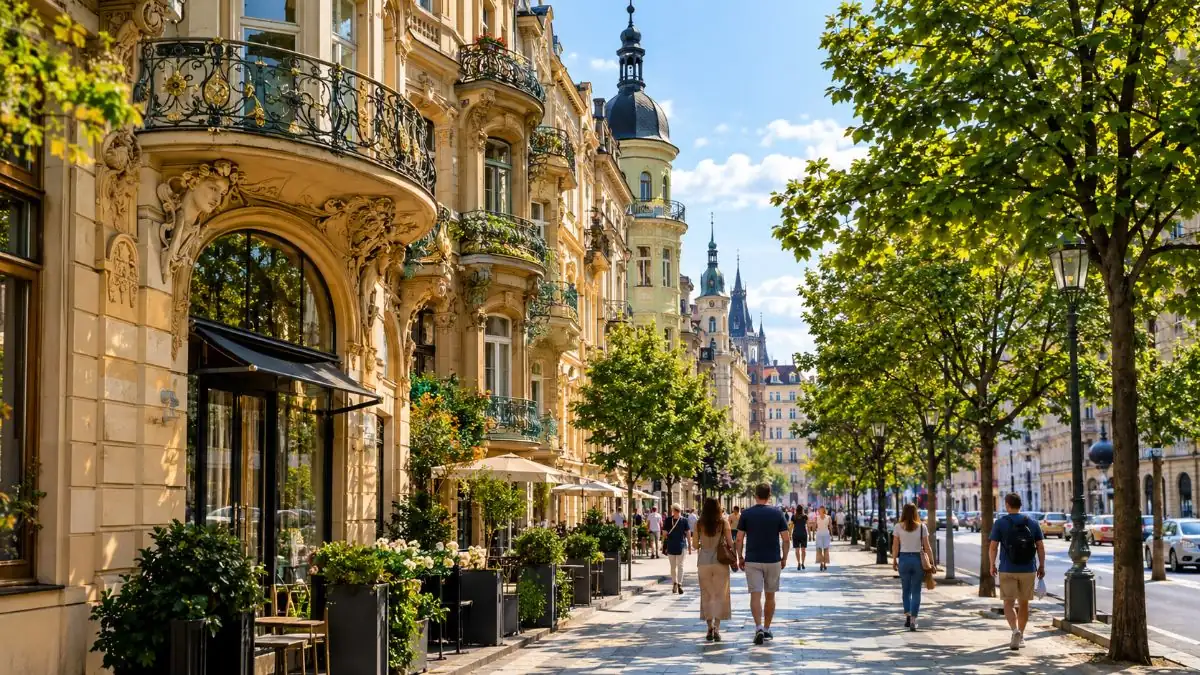
Pařížská street: Art Nouveau buildings constructed after the slum clearance, where the ghetto once stood.
Jaroslav Róna’s statue of Franz Kafka stands between the Spanish Synagogue and the Church of the Holy Spirit.
Jerusalem Synagogue on Jeruzalémská street has its own admission and a season from spring to December. More in the article is Josefov free?
The museum is closed every Saturday and on Jewish holidays. Closure dates are listed on the museum’s opening hours page.
Tours with interior visits do not run on these days. One reviewer described the synagogues being closed for a holiday, so check the date.
You can cancel GetYourGuide tours free of charge up to 24 hours before the start.
A ticket bought directly at the museum is non-refundable. If you are unsure about the date, buy it on the spot or choose a tour with free cancellation.
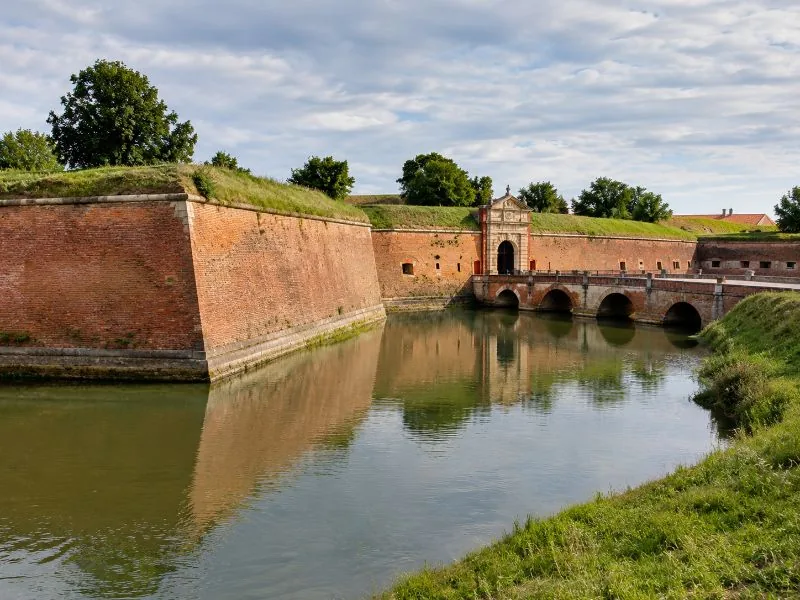
The children’s drawings in Pinkas Synagogue were created in the Terezín ghetto. This tour takes you there by bus from Rudolfinum, guides you through the Small Fortress and shows the Large Fortress and cemetery. It’s a tough day, so plan it separately from Josefov.
Josefov is one of Prague’s most visited quarters and yet one of the least understood. Most of what people expect to see hasn’t stood here for a century. What remains is all the more powerful.
The ghetto that disappeared
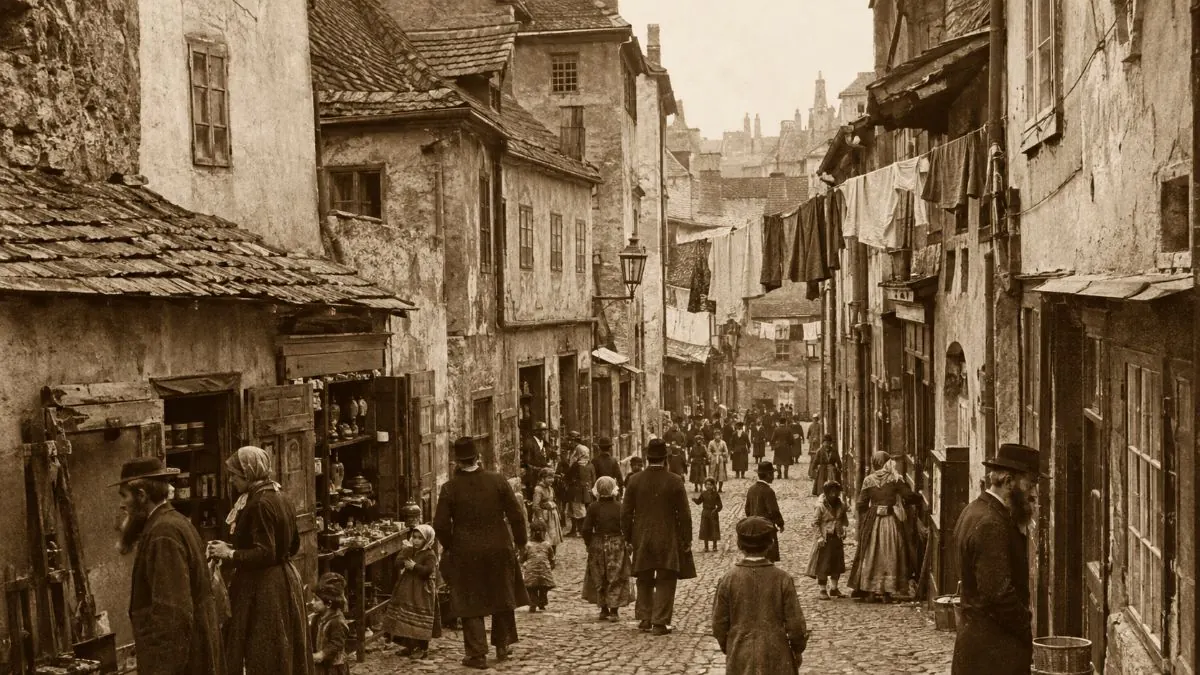
Jews had settled in Prague by the 10th century at the latest. A ghetto grew up around the Old-New Synagogue, complete with its own town hall, schools and cemetery, and it enjoyed a golden age in the 16th century: Mordechai Maisel, the community’s banker and primate, built synagogues and paved the streets, while Rabbi Judah Loew ben Bezalel taught here. The quarter was named Josefov in 1850 after Emperor Joseph II, whose tolerant reforms eased life for the Jews.
Then came the slum clearance. Between 1893 and 1913, the city demolished almost the entire quarter, where, according to period records, over 18,000 people lived, and built an Art Nouveau boulevard in its place, modelled on Paris. Six synagogues, the Old Jewish Cemetery and the Town Hall remained. That’s why Pařížská street looks like Vienna rather than a ghetto: the Josefov you see today is mainly what wasn’t torn down.
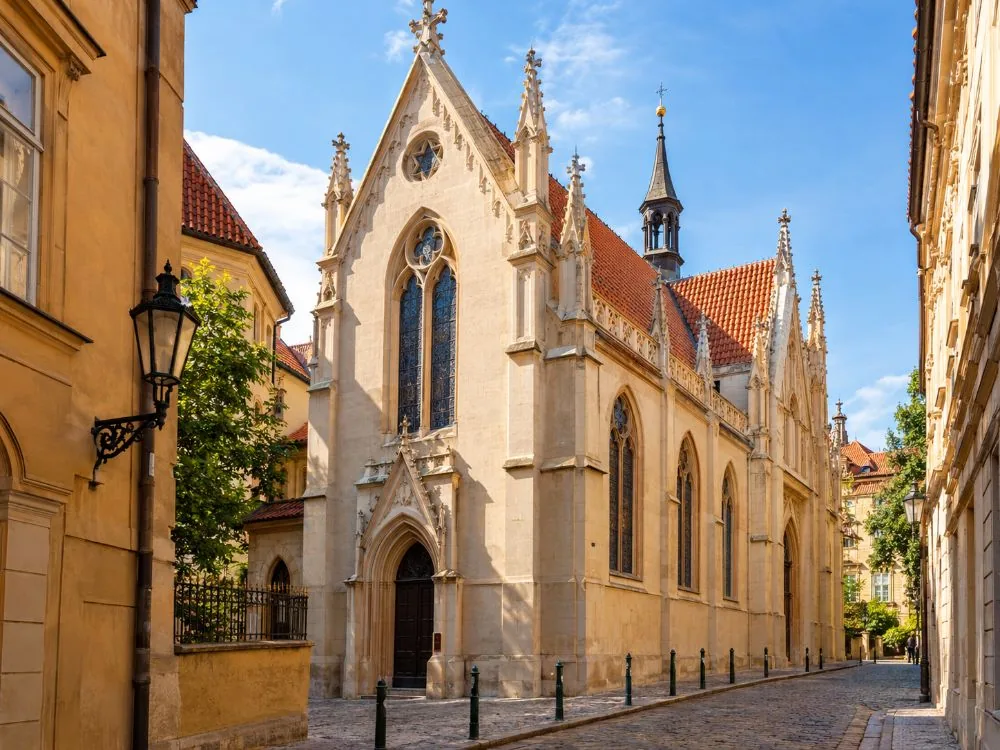
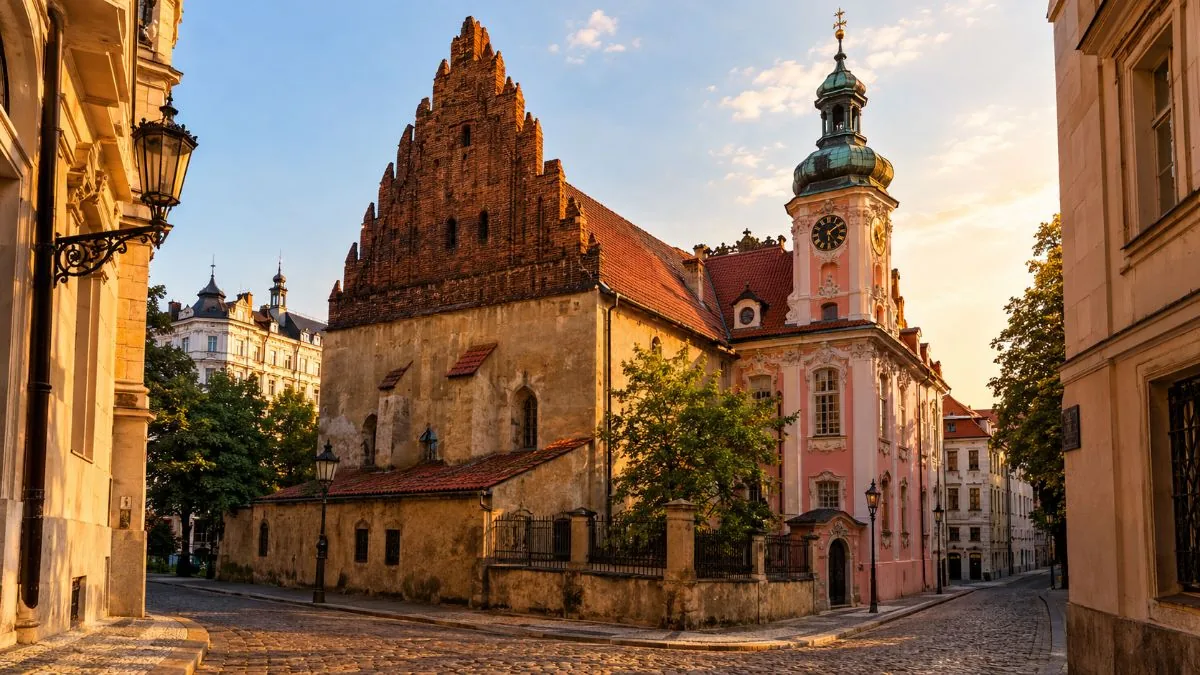
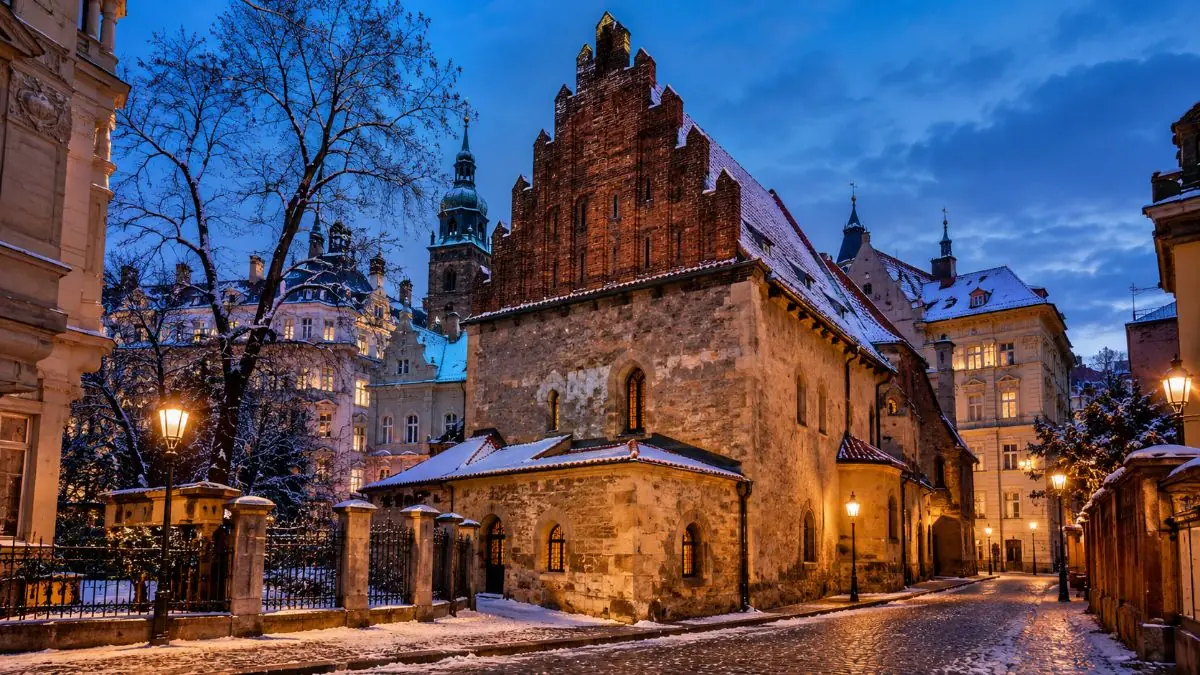
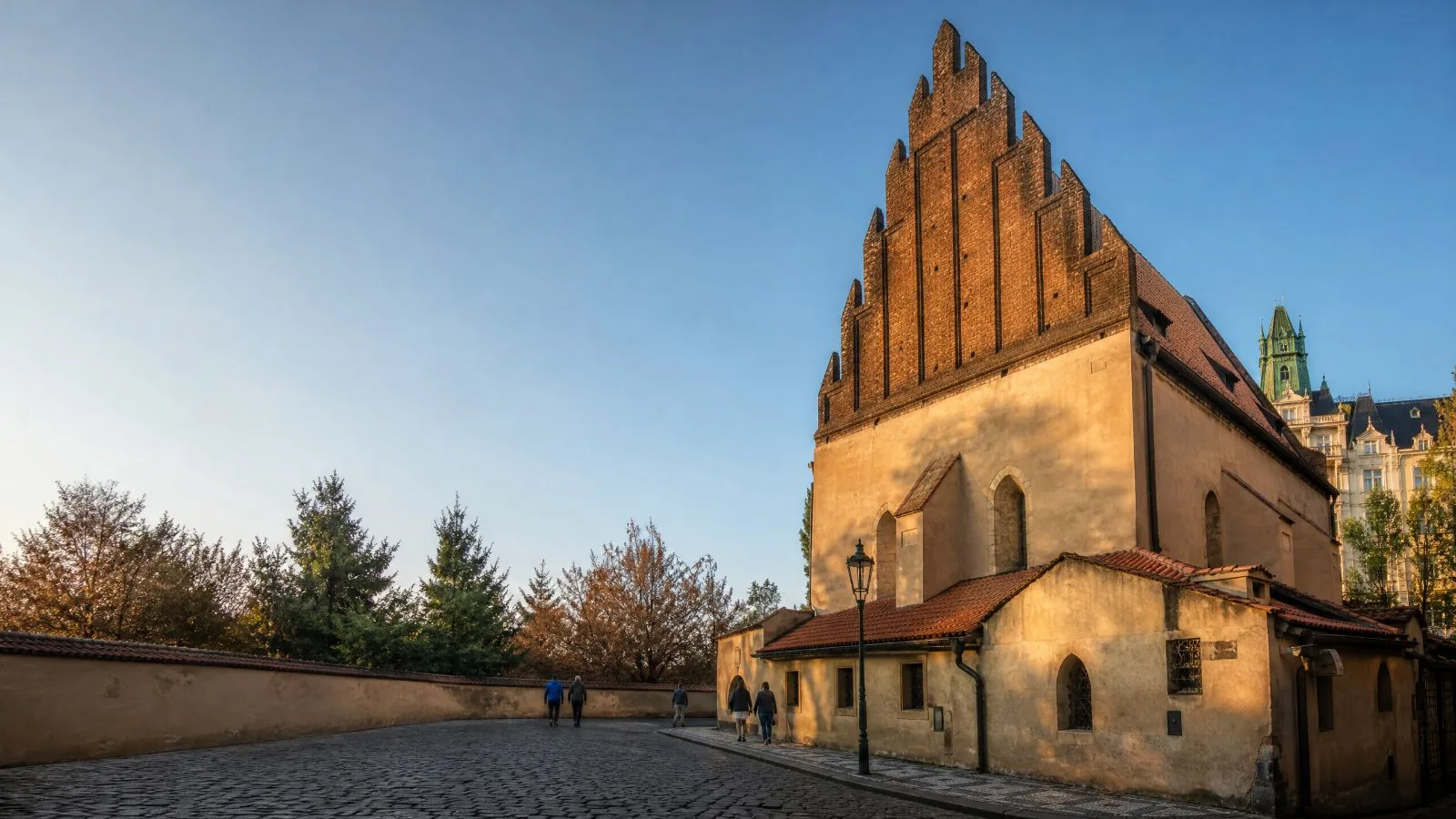
The Old-New Synagogue was built in the last third of the 13th century and still serves as the main synagogue for Prague’s Jewish community.
The Old-New Synagogue and the Golem
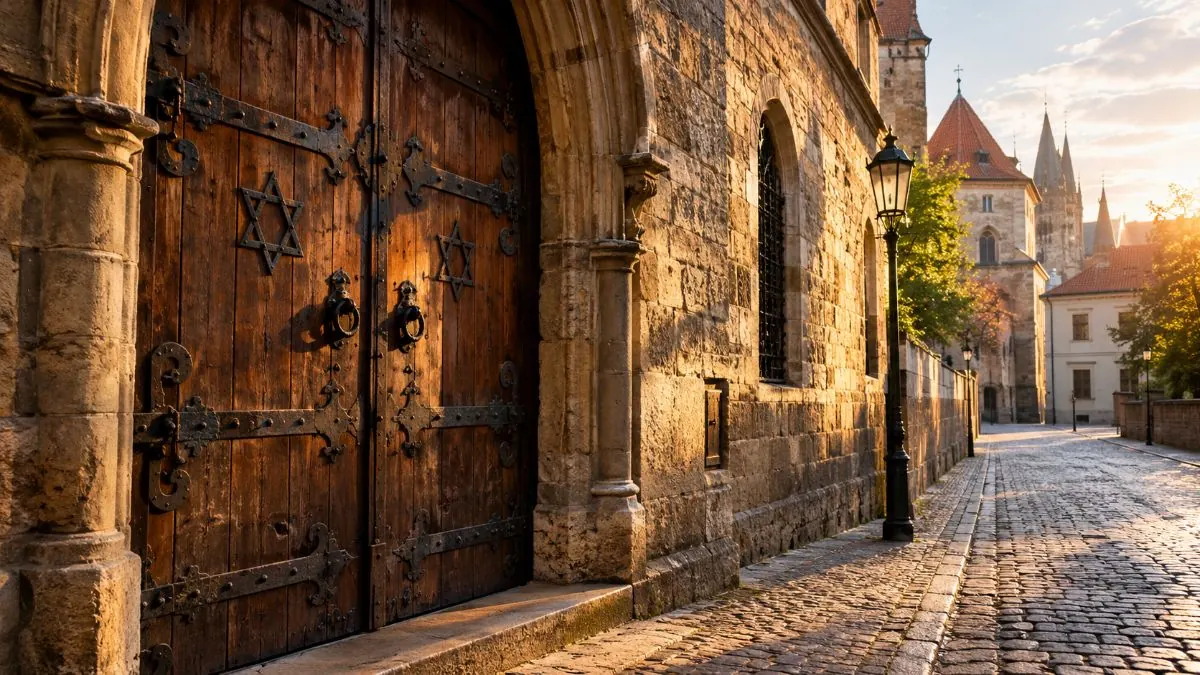
It was constructed by stonemasons from the royal works, who also worked on the nearby Convent of St Agnes. At first it was called the New or Great School; it only became the “Old-New” when more synagogues were added at the end of the 16th century. Legend has it that the foundation stones were brought by angels from the Temple in Jerusalem and that the remains of the Golem, the clay creature brought to life by Rabbi Loew, lie in the attic. As no one is allowed up there, the legend remains unconfirmed. Rabbi Loew died in 1609, and his grave in the Old Jewish Cemetery is one of the most visited.
Fine print: the term “Jewish Quarter” in a tour title does not mean entry inside. Short walking tours show the synagogues from the outside, and you buy a separate ticket for the museum circuit. On our tour pages we always state which door you enter through.
Cemetery and memorial
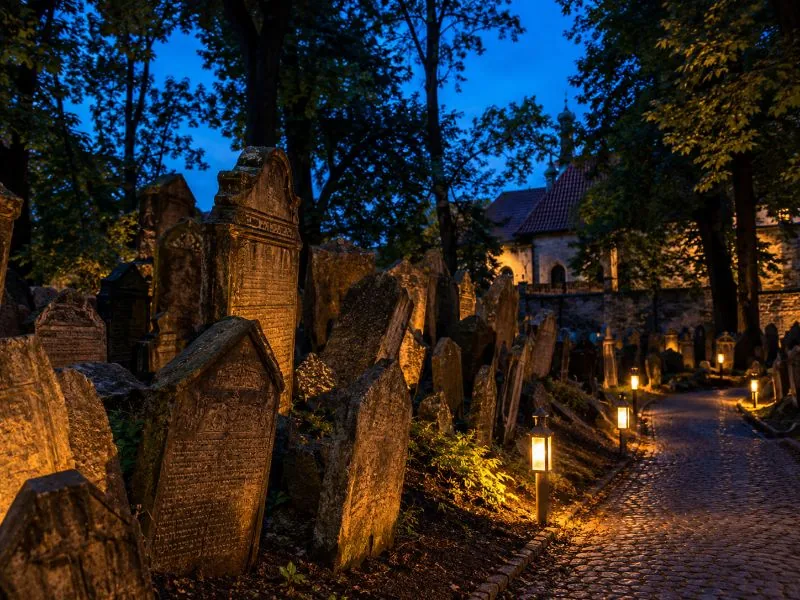
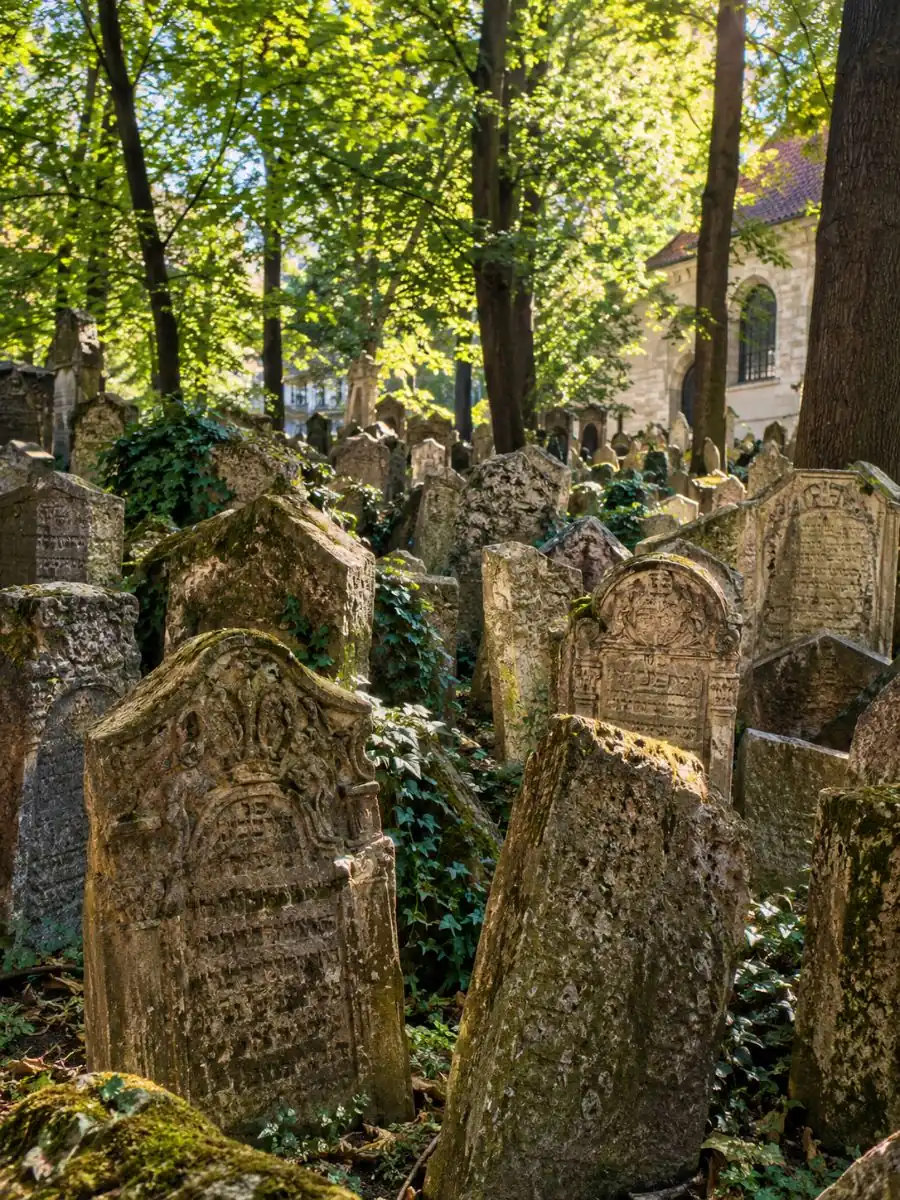
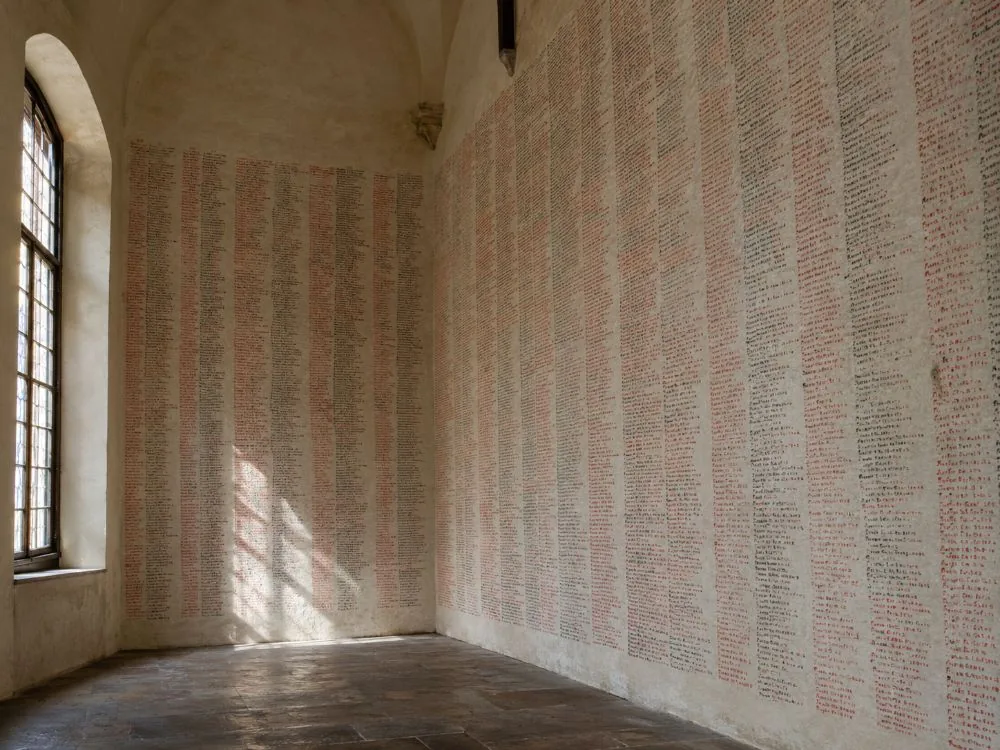
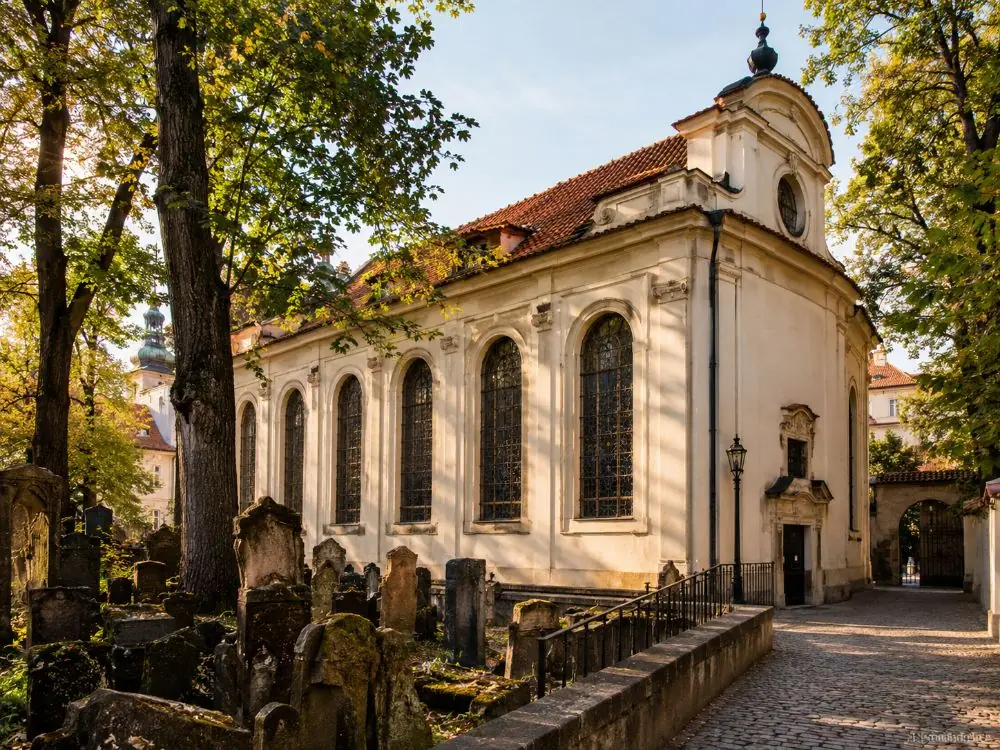
The Old Jewish Cemetery was used from the first half of the 15th century until 1787, and the museum records over 12,000 gravestones there. It is often written that in places the graves lie in up to twelve layers; no verified layer count has been published, but you can see the cramped conditions for yourself. Right next door stands the Pinkas Synagogue, with the names of almost 80,000 Jews from Bohemia and Moravia murdered in the Shoah, along with drawings by children from Terezín. It is the quietest place in the entire circuit.
Pinkas Synagogue has served as a memorial to the Shoah victims from Bohemia and Moravia since the post-war years.
How the collections survived
The Jewish Museum in Prague was founded in 1906, and its first collections came from synagogues demolished during the slum clearance. In 1942, the Jewish community established the Central Jewish Museum, where items from abolished communities in Bohemia and Moravia were gathered. It is often repeated that the Nazis wanted to create a "museum of an extinct race". However, there is no evidence for this plan. After 1950, the museum was state-owned and regained its independence on 1 October 1994. It now manages over 44,000 artefacts and 130,000 books.
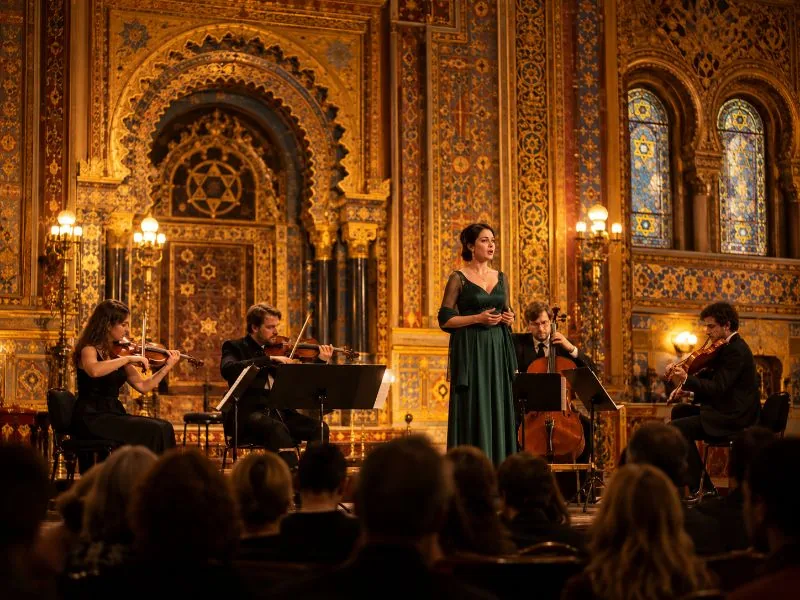
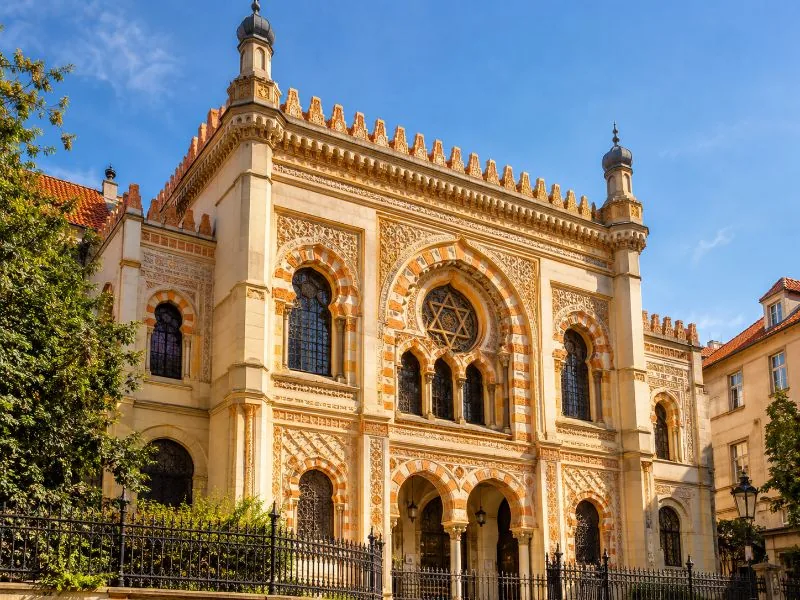
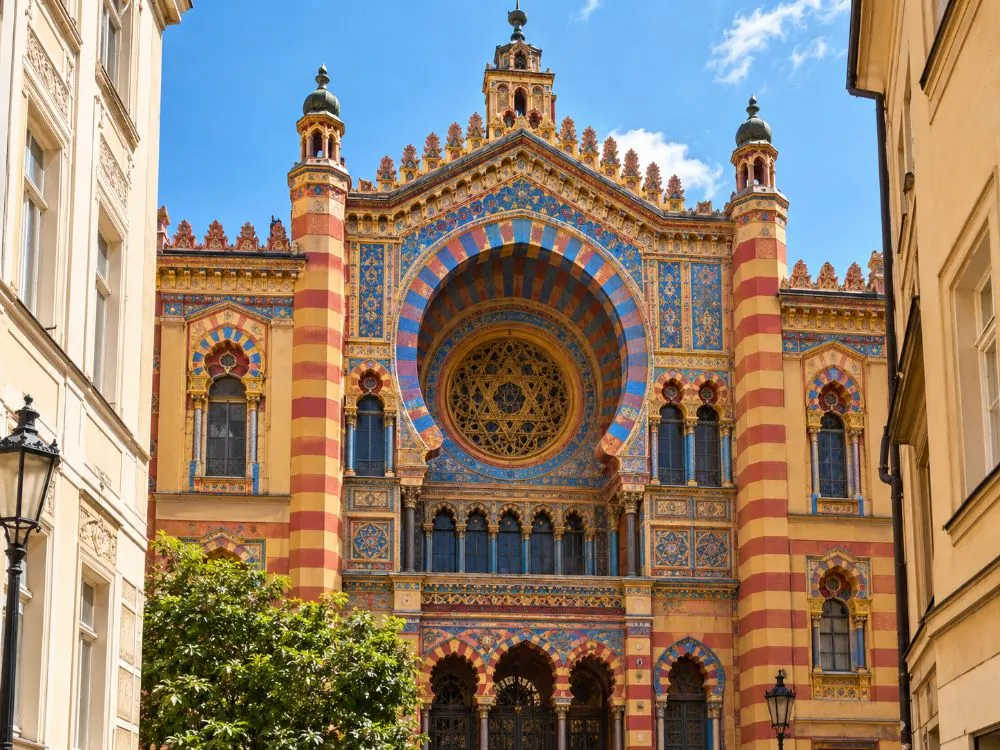
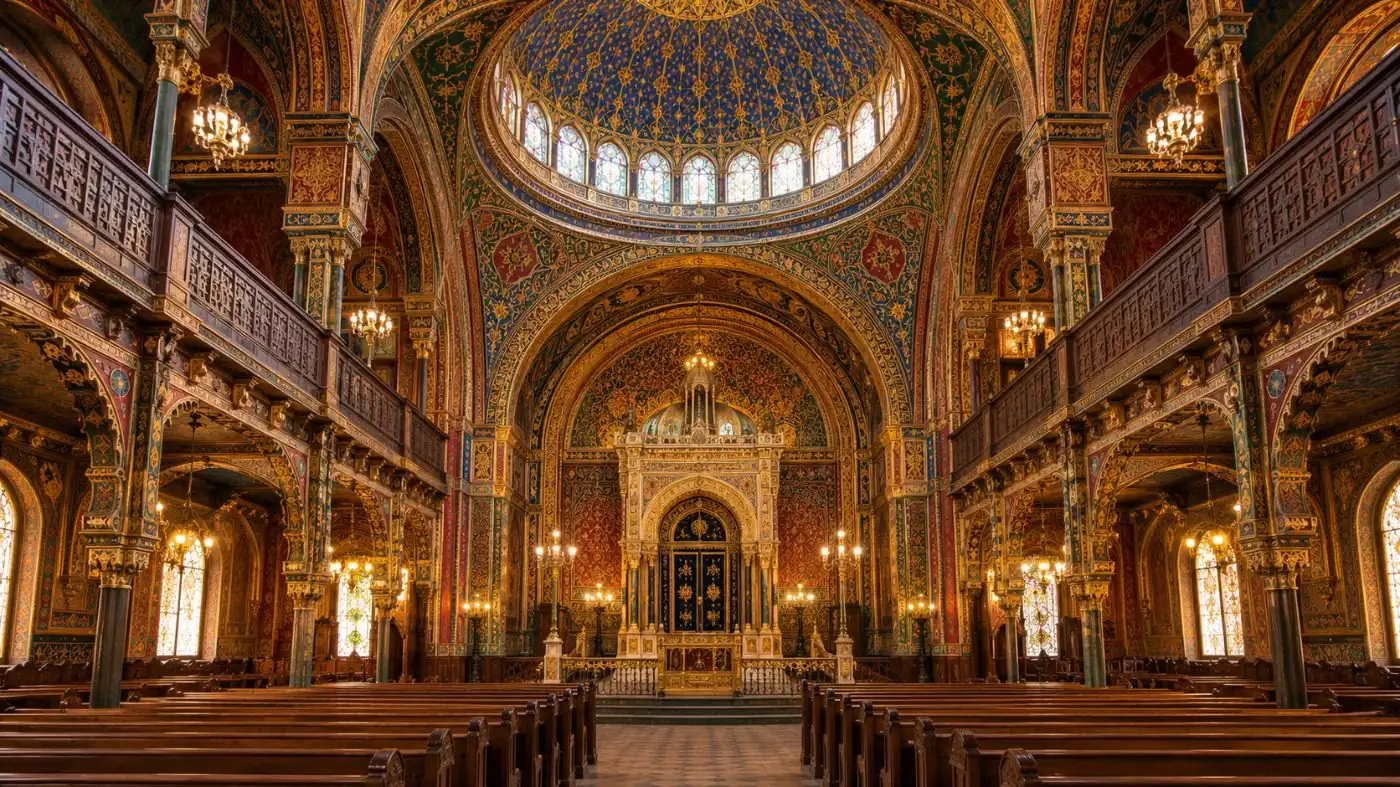
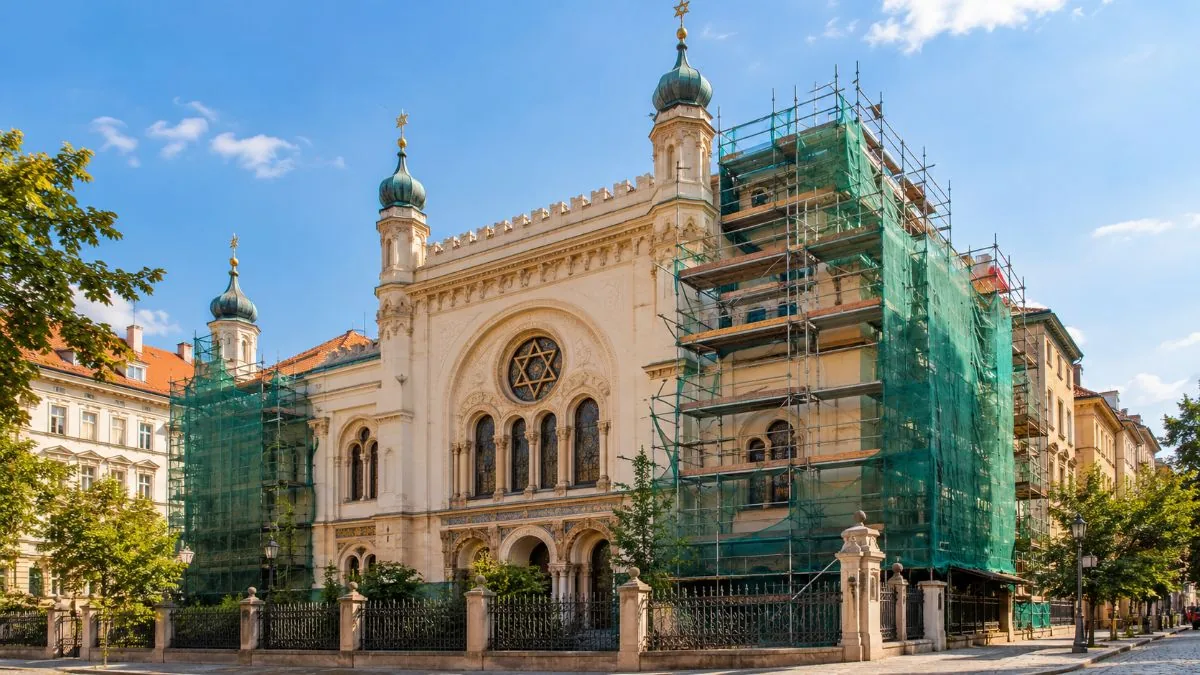
The Spanish Synagogue, built in 1868, is the youngest in the circuit and the most richly decorated.
Yes, if you’re interested in history and places with a story. Within a few hundred metres stand Europe’s oldest still-active synagogue, a cemetery with over 12,000 gravestones and a memorial to nearly 80,000 Shoah victims. The museum recommends two to three hours for the main sites. For what’s where, see the guide what to see in Josefov.
Is Prague's Jewish Quarter free?
You can walk the streets. Pařížská, Široká or Maiselova can be explored without a ticket, and from the outside you’ll see the Old-New Synagogue and the Town Hall with its clock. To enter the synagogues and the Old Jewish Cemetery, however, you need a Jewish Museum in Prague ticket. For details, see the article is Josefov free?
What does the ticket cover and how long is it valid?
One Jewish Quarter Prague ticket covers the Old-New Synagogue, Pinkas Synagogue, Maisel Synagogue and Spanish Synagogue, the Old Jewish Cemetery and the Klausen Synagogue when it is open. For individuals and families it is valid for three days, one entry per site; whether these are calendar days or opening days varies by museum source. More in the guide Jewish Quarter tickets.
Is the Old-New Synagogue included in the ticket price?
Yes. Since 1 January 2024, the Old-New Synagogue can no longer be visited separately; it is part of the Jewish Quarter circuit. However, it is managed by the Jewish Community, so it has a different entrance and slightly different opening hours than the museum synagogues.
When is the Jewish Museum in Prague closed?
Every Saturday and on Jewish holidays. In 2026 these included, among others, Pesach, Shavuot, Yom Kippur and Simchat Torah. The Old-New Synagogue closes on Fridays roughly one hour before Shabbat begins. Current times are in the guide opening hours.
Why is Prague’s Jewish Quarter so famous?
Because of what survived. From the ghetto demolished during the slum clearance of 1893 to 1913, six synagogues, the old cemetery and the town hall remained. Add the legend of Rabbi Loew and the Golem, and the collections of the Jewish Museum in Prague, founded in 1906.
Why is it called Josefov?
Named after Emperor Joseph II, whose tolerance reforms of 1781 and 1782 eased restrictions on Jews. In 1850 the quarter was named Josefov and became part of Prague. The full story is in the guide Josefov history.
Can I tour Josefov with a guide?
Yes, and almost every tour sells the same museum ticket plus commentary. Watch out for short walks that only go outside. The differences are summarised in with a guide, or on your own?
Do I need to cover my head?
On the Old Jewish Cemetery, men must, either with their own or a borrowed covering. In synagogues, visitors should wear clothing that covers the shoulders and midriff; swimwear and bare feet are not allowed.
Can I take photos in the synagogues?
Yes, for personal use, with a valid ticket. Tripods, selfie sticks, flash and additional lighting are prohibited.
Are there many Jews living in Prague today?
Not many. The 2018 estimate for the whole of the Czech Republic is roughly 3,900 people, most of whom live in Prague. The Old-New Synagogue still serves as the main synagogue for the local Jewish community.
Can I take a suitcase into the museum?
No. Luggage over 30 litres will not pass security, and the museum has no storage facilities. Leave your suitcase at the hotel or in a station locker.
Ready?
First the doors, then the day.
The most popular choice is a guided walk with tickets to the synagogues and the cemetery. Free cancellation up to 24 hours in advance.
 At your own pace
★ 4,51 dayfree cancellation