Recommended choice: Walking tour with tickets, 2.5 h. Book this Tour details
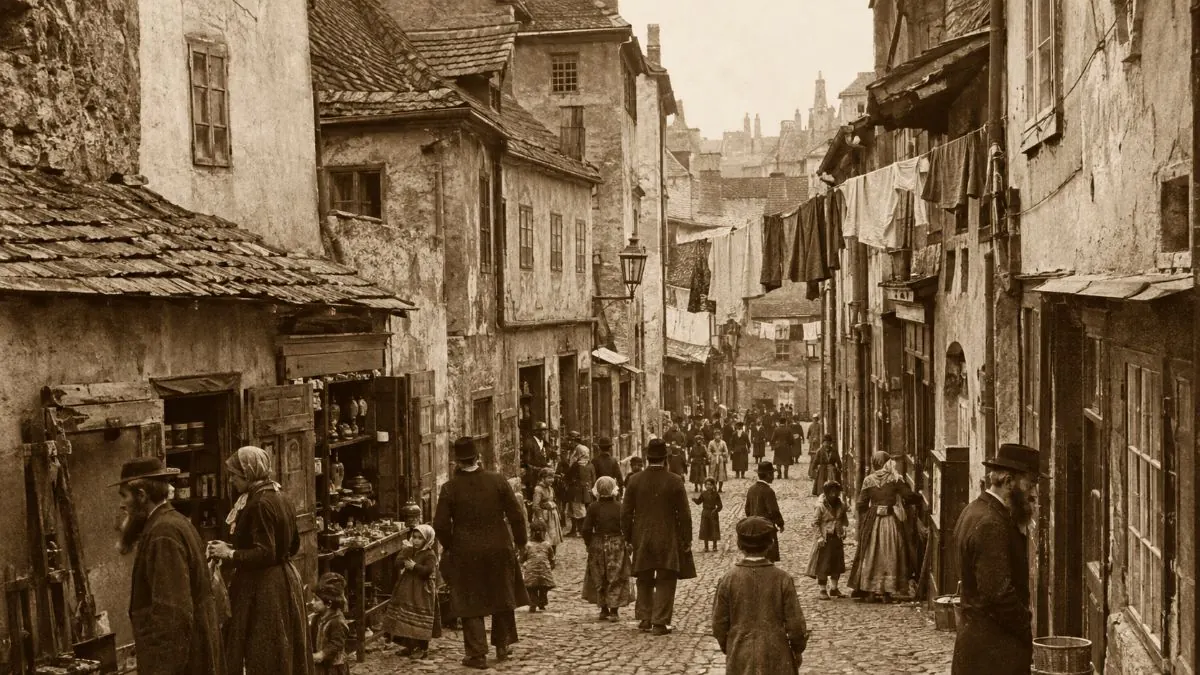
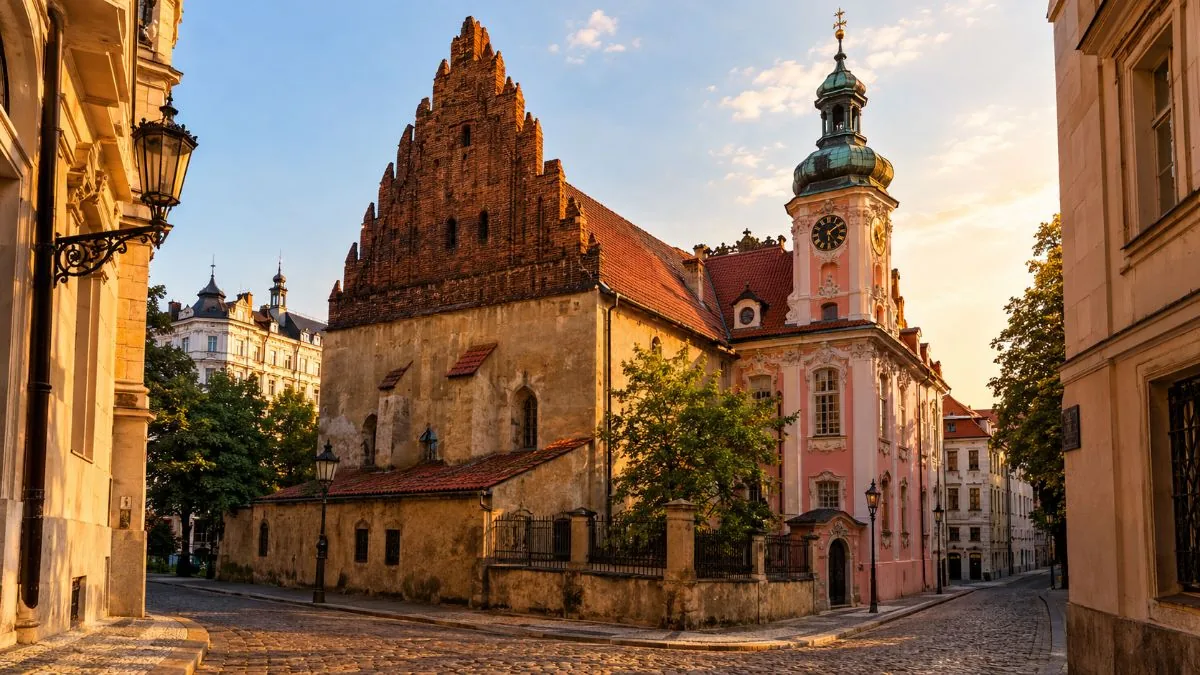
Josefov packs more monuments into a few streets than many entire towns. This is because of what happened around 1900: the ghetto was demolished during slum clearance, preserving only the most valuable sites. Today, the Old-New Synagogue, the Old Jewish Cemetery, four synagogues of the Jewish Museum in Prague and the Jewish Town Hall stand here.
The museum estimates two to three hours for the full circuit. If you read every label in the Maisel and Spanish Synagogues, you’ll need more time.
Short answer
The main sites are the Old-New Synagogue, the Old Jewish Cemetery, the Pinkas, Maisel and Spanish Synagogues, all covered by one ticket. The Klausen Synagogue and Ceremonial Hall have limited opening or are closed in 2026. Allow two to three hours for the circuit.
What is there to see in the Jewish Quarter?
Six synagogues, the Old Jewish Cemetery and the Jewish Town Hall. One ticket opens five of them; the rest can be seen from the outside.
An overview with the recommended time for each site:
| Location | What you’ll see | Recommended time |
|---|---|---|
| Old-New Synagogue | Gothic interior, still used for services | 15 minutes |
| Pinkas Synagogue | Names of Shoah victims, children’s drawings from Terezín | 30 minutes |
| Old Jewish Cemetery | Over 12,000 gravestones, Rabbi Loew’s grave | 30 minutes |
| Maisel Synagogue | History of Jews in Bohemia and Moravia up to the 18th century | 30 minutes |
| Spanish Synagogue | Moorish interior, history of the 19th and 20th centuries | 30 minutes |
| Klausen Synagogue | Temporary exhibitions, when open | According to the programme |
| Jewish Town Hall, High Synagogue | Exterior only | 5 minutes |
Why is the Old-New Synagogue so exceptional?
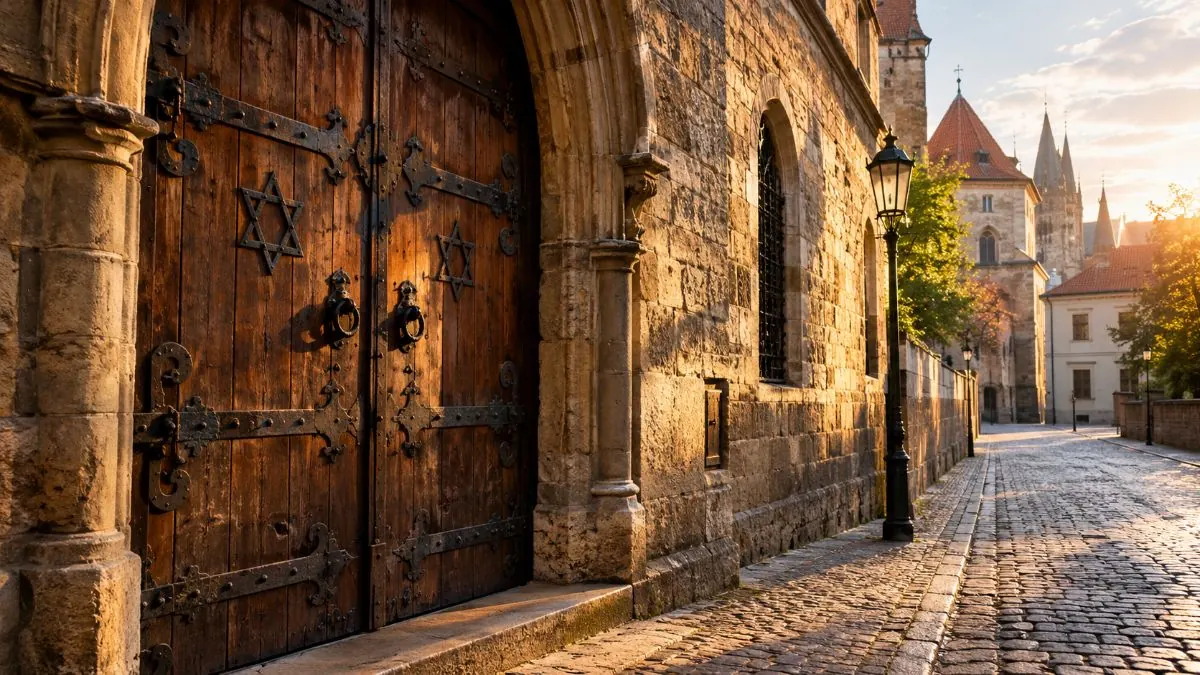
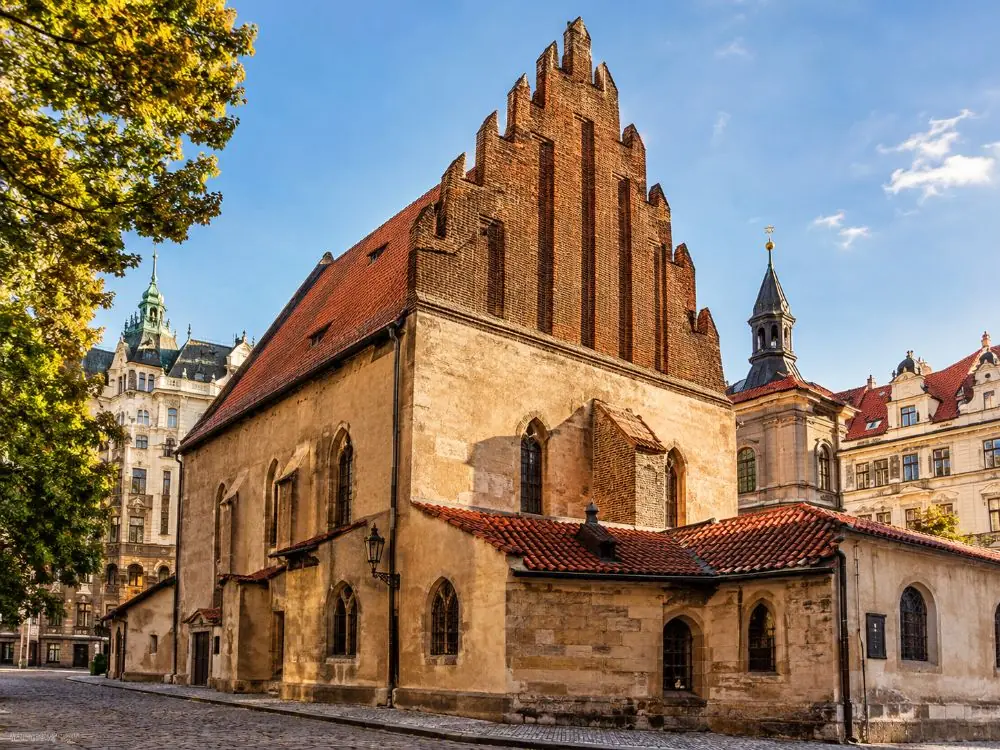
It is the oldest surviving synagogue in Europe. Built in the last third of the 13th century, it has served Prague’s Jewish community ever since.
It was constructed by stonemasons from the royal workshop who also worked on the nearby Convent of St Agnes. Originally, it was called the New or Great School. When more synagogues were built at the end of the 16th century, it became the Old-New Synagogue. Inside, it is dimly lit, with two naves and a Gothic vault.
There are two main legends. The foundation stones were allegedly brought by angels from the Temple in Jerusalem, and the attic is said to hold the remains of Rabbi Loew’s Golem. The attic is not open to the public.
What will you see at the Old Jewish Cemetery?
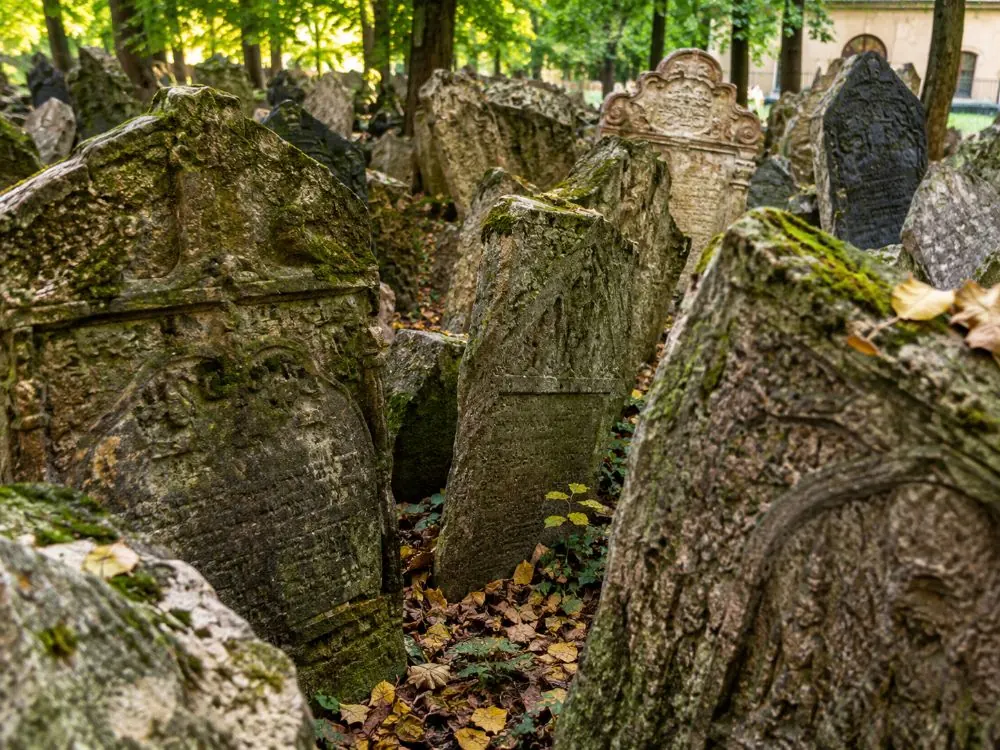
Over 12,000 tombstones from 1439 to 1787, crowded into a small space. The oldest belongs to the poet Avigdor Kara.
The cemetery could not be expanded, so according to tradition, burials were layered, allegedly up to twelve deep. This is not precisely documented, but the tightly packed tombstones speak for themselves. Buried here are Rabbi Loew, Mordechai Maisel, the astronomer David Gans and the scholar Josef Šelomo Delmedigo. Visitors traditionally place stones and slips of paper with wishes on Rabbi Loew’s grave.
You must follow the marked route, from the Pinkas Synagogue to the Ceremonial Hall. Men should cover their heads.
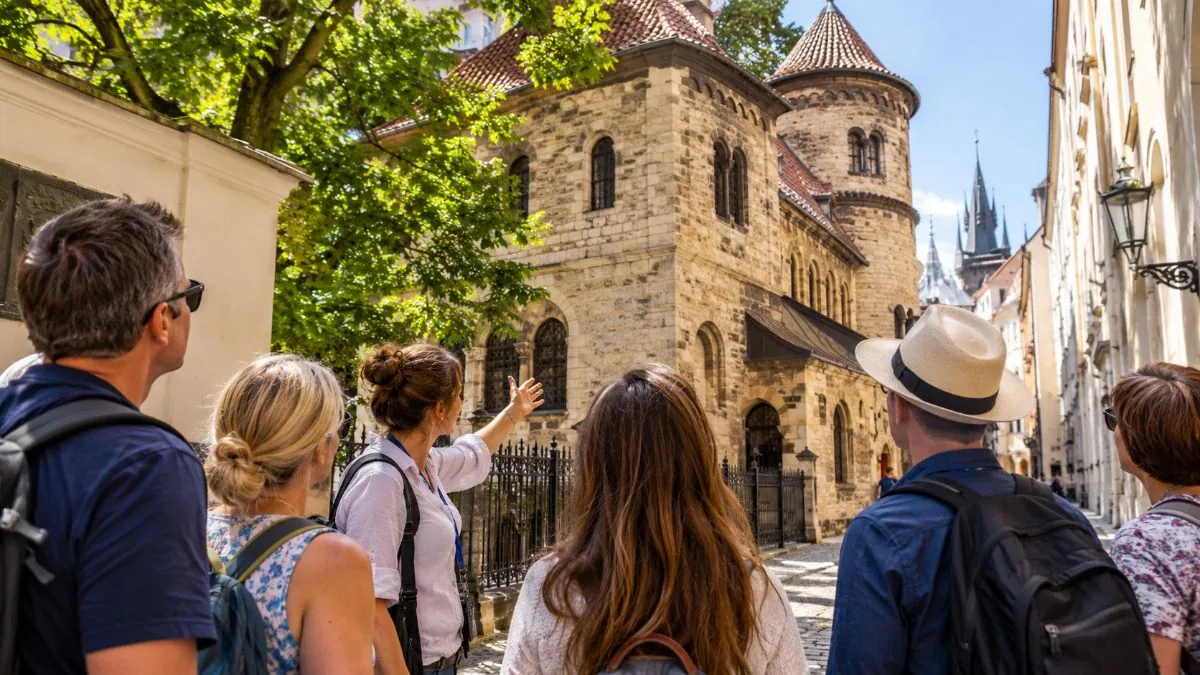
Rabbi Loew’s grave and the stories of the tombstones with a guide: the walk with tickets lasts 2.5 hours, depending on the listing.
Book thisWhat is in the Pinkas Synagogue?
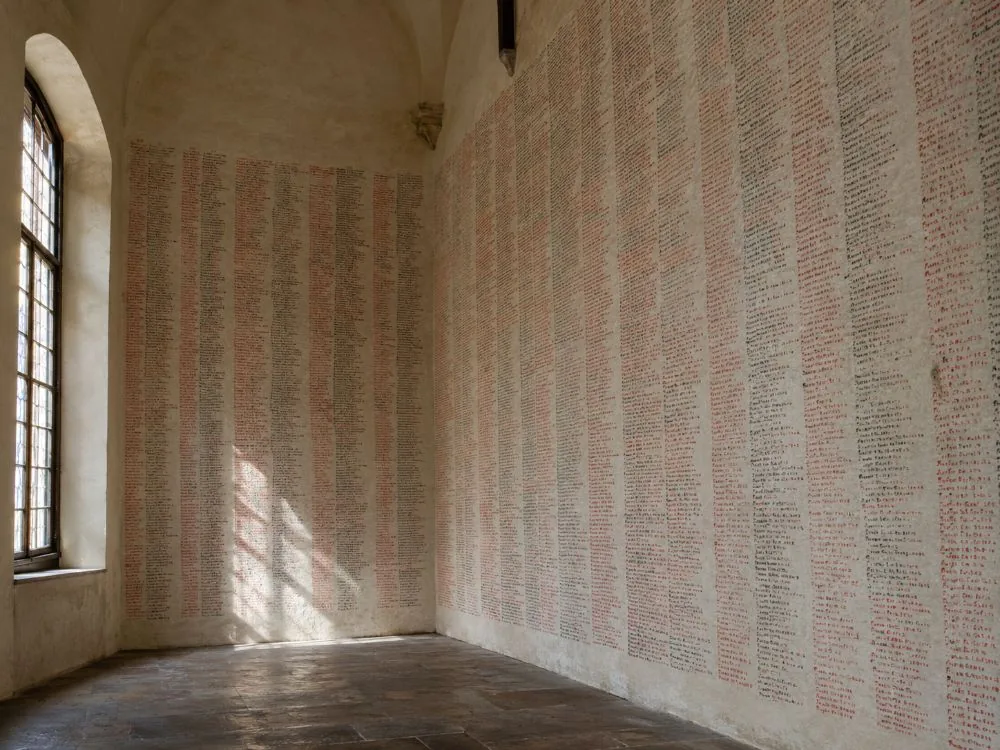
Memorial to the Shoah victims: the names of nearly 80,000 Jews from Bohemia and Moravia on the walls, with children’s drawings from the Terezín ghetto on the upper floor.
Each name is accompanied by a birth and death date, arranged by town. It is the quietest place in the entire circuit; guides are not allowed to speak loudly here. The drawings upstairs were created in Terezín during art classes; most of their authors did not survive the war.
You enter the cemetery from the Pinkas Synagogue, so it makes sense to visit it just before.
Why visit the Maisel and Spanish Synagogues?
For the history. Maisel Synagogue tells the story of Jews in Bohemia and Moravia from the 10th to the 18th century, while the Spanish Synagogue continues with the 19th and 20th centuries.
Maisel Synagogue at Maiselova 10 was built at the end of the 16th century, funded by Mordechai Maisel. Its current neo-Gothic appearance dates from the turn of the 19th and 20th centuries. The exhibition features silver, textiles and manuscripts from the museum’s collections.
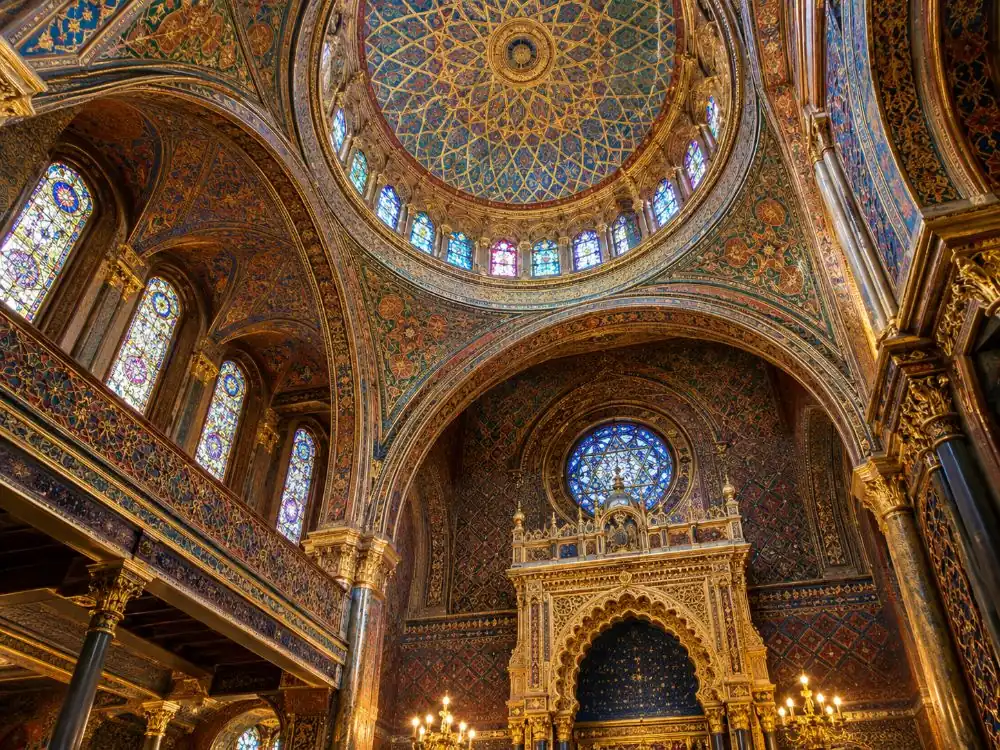
Spanish Synagogue at Vězeňská 1 dates from 1868 and stands on the site of Prague’s oldest prayer house, the Old School. Its Moorish interior, covered in gilded ornaments, is one of the most photographed spots in Josefov. Evening concerts are held here.
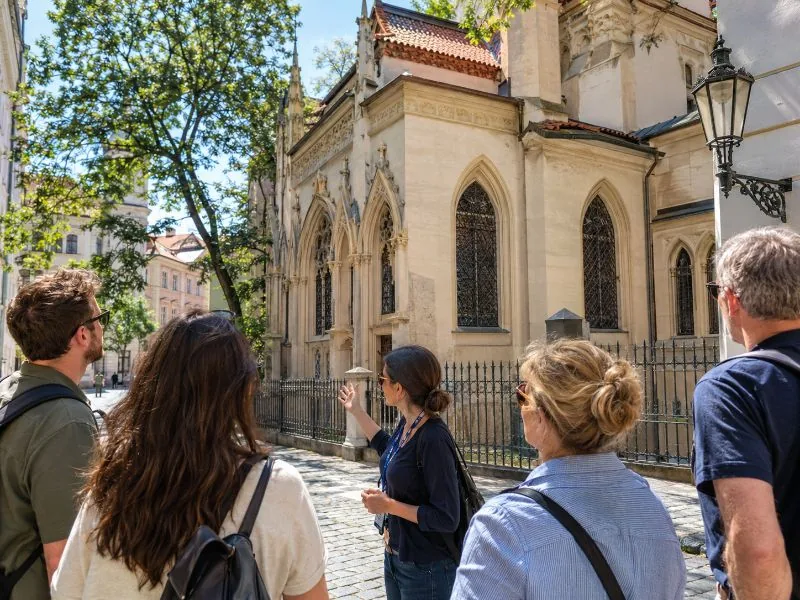
Five sites on the circuit with a licensed guide, from Maisel Synagogue to the Spanish Synagogue, with tickets included.
Book this Tour detailsWhat is closed in Josefov?
The Ceremonial Hall is awaiting reconstruction, and the Klausen Synagogue is only open for temporary exhibitions and events. The Jewish Town Hall is not accessible to the public.
The Jewish Museum in Prague removed the permanent exhibition on Jewish customs from Klausen Synagogue on 1 July 2024. It plans to open a new one by 2028 at the latest; in the meantime, the synagogue hosts short-term exhibitions. To check if it’s open on the day of your visit, see the Klausen Synagogue page.
The Ceremonial Hall at the cemetery exit remains closed, and the exhibition on burial customs from 1997 to 2024 is no longer there. The Robert Guttmann Gallery is undergoing reconstruction. For more, see the article what is closed in Josefov.
Are the High and Jerusalem Synagogues part of the circuit?
No. The High Synagogue is an active prayer house for the community and can only be seen from the outside, while the Jerusalem Synagogue has its own ticket.
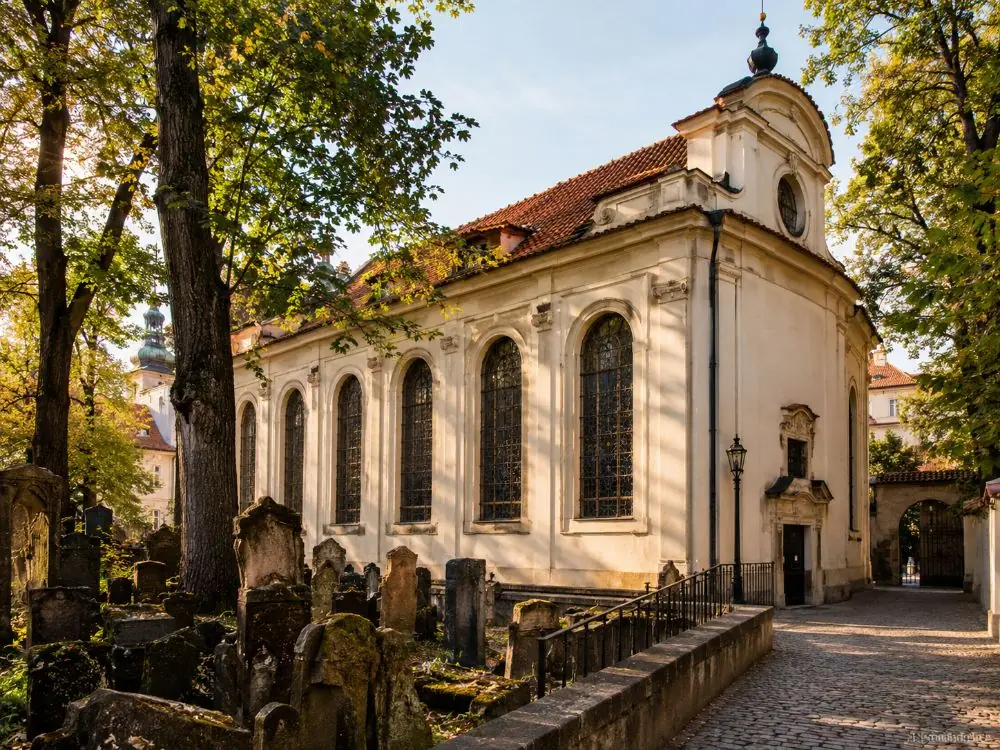
High Synagogue in Červená street dates from the 16th century and is named for its prayer hall being on the first floor. It serves the community’s regular services. Jerusalem Synagogue stands outside Josefov in the New Town. This 1906 Art Nouveau-Moorish building is worth a detour if you have an hour to spare.
Want to explore at your own pace? A ticket with an introduction and an audio guide on your phone covers everything that’s open.
Book thisIn what order should you explore Josefov and how much time should you allow?
Allow two to three hours. Start at 9 am with the Old-New Synagogue and finish at the Spanish Synagogue.
- Old-New Synagogue in Červená street is quietest in the morning.
- Maisel Synagogue, a five-minute walk along Maiselova street.
- Pinkas Synagogue at Široká 3, with the Old Jewish Cemetery.
- Cemetery exit by Klausen Synagogue, if it is open.
- Spanish Synagogue at Vězeňská 1, with Kafka’s statue in front of it.
The busiest time is between 11 am and 3 pm. If you can’t make it in the morning, go after 3 pm. For opening hours, see the opening hours guide.
A private guide just for your group: you set the pace and the stops yourself.
Book thisFrequently asked questions
How much time do I need for the Jewish Quarter?
Two to three hours for the synagogues and cemetery. A free walk around the streets from the outside takes about three-quarters of an hour.
What to see if I only have an hour?
The Old-New Synagogue, Pinkas Synagogue and the Old Jewish Cemetery. They’re close together and are places you won’t see anywhere else.
Can I go into the Jewish Town Hall?
No, the building serves the Jewish Community and is not open to the public. However, you can see the clock with Hebrew letters from Maiselova street.
Is Josefov wheelchair accessible?
Only partially. The Spanish and Maisel Synagogues are barrier-free, and the cemetery can be accessed without barriers only from the east on U Starého hřbitova street. Other sites are not accessible.
Book now
Choose a tour
All these tours can be cancelled with free cancellation up to 24 hours in advance. On Saturdays and Jewish holidays, the interiors are closed.
Jewish Quarter walk with entry tickets
- Licensed guide, commentary in five languages
- Entry to the Old-New, Pinkas, Maisel and Spanish Synagogues
- Entry to the Old Jewish Cemetery
Jewish Quarter ticket with audio guide
- Admission to the Old Jewish Cemetery and the Old-New, Spanish, Maisel and Pinkas Synagogues
- 20-minute guided introduction, available in English
- Optional audio guide on your phone, 9 languages
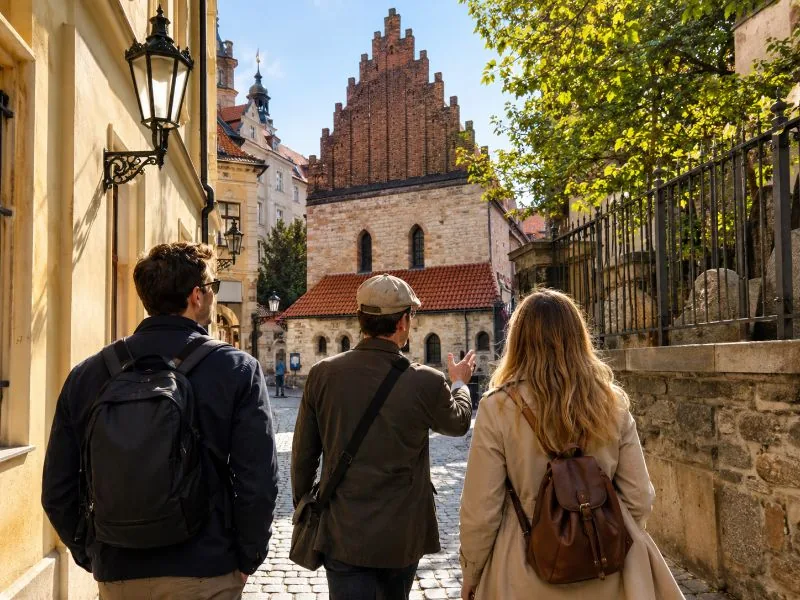
Private three-hour tour of Josefov
- Private guide, English, French or German
- Admission to the Jewish Museum in Prague as per offer, verify
- Meeting point at Old Town Square, guide with a name sign